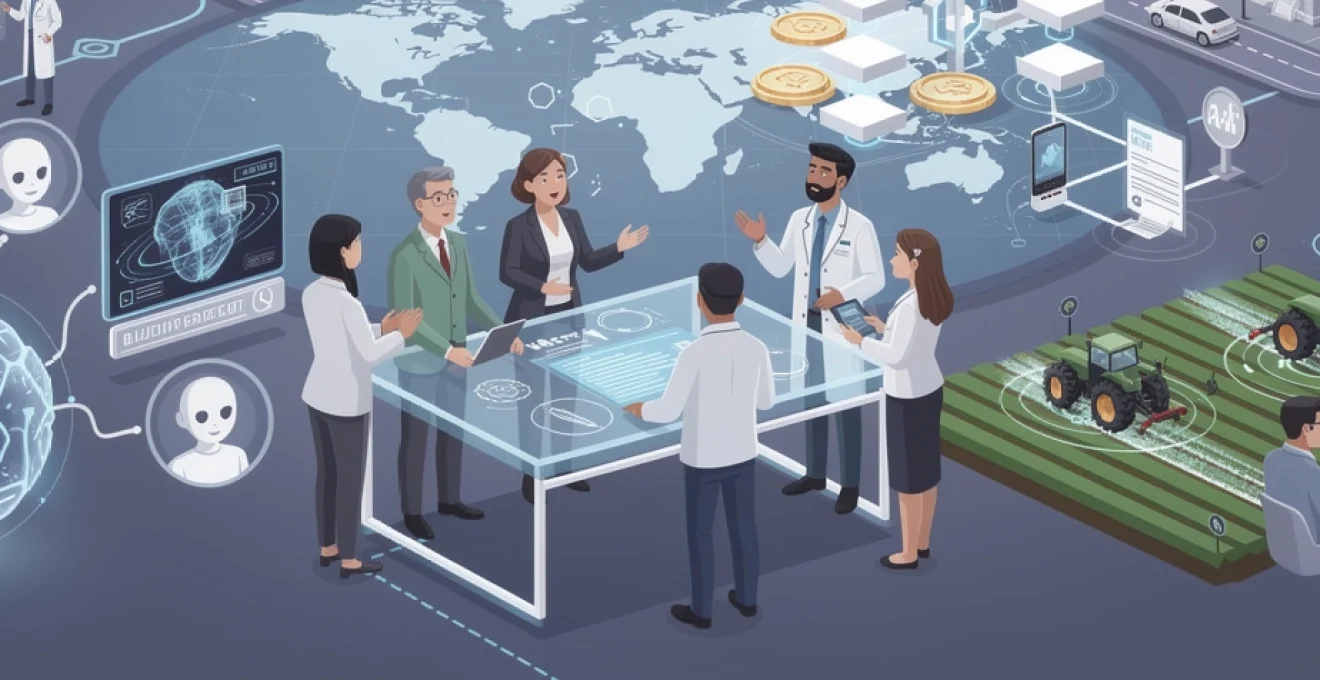
The digital revolution has entered a new phase of unprecedented acceleration, fundamentally reshaping every aspect of modern society. From artificial intelligence algorithms composing symphonies to blockchain networks enabling decentralised finance, technological innovations no longer merely enhance processes—as explored in macro-economic analyses of societal transformation, they’re creating paradigms for how we work, communicate, and organise societies. This transformation extends far beyond Silicon Valley boardrooms, touching the lives of farmers in rural communities who now use IoT sensors to optimise crop yields, patients receiving AI-powered medical diagnoses, and citizens participating in smart city initiatives that reduce urban carbon footprints by up to 30%.
What makes this era particularly remarkable is the convergence of multiple technological breakthroughs occurring simultaneously. Machine learning capabilities have expanded exponentially, quantum computing is transitioning from theoretical possibility to practical reality, and the Internet of Things is creating interconnected ecosystems that generate valuable data insights. These innovations aren’t developing in isolation—they’re creating synergistic effects that amplify their individual impacts, leading to what experts describe as a technological acceleration curve steeper than anything humanity has previously experienced.
Artificial intelligence and machine learning applications reshaping modern industries
The artificial intelligence landscape has evolved dramatically from its early rule-based systems to sophisticated neural networks capable of tasks that seemed impossible just a decade ago. Modern AI systems demonstrate remarkable versatility, from analysing complex financial patterns to creating photorealistic artwork and conducting scientific research. The economic impact is staggering—McKinsey estimates that AI could contribute up to $13 trillion to global economic output by 2030, representing a 16% increase in cumulative GDP compared to today’s levels.
Machine learning algorithms have become increasingly sophisticated in their ability to process and interpret vast datasets. These systems excel at identifying patterns humans might miss, making predictions with unprecedented accuracy, and continuously improving their performance through experience. The democratisation of AI tools has enabled smaller companies to access capabilities previously reserved for tech giants, levelling competitive playing fields across numerous industries.
GPT-4 and large language models transforming content creation and communication
Large language models represent one of the most visible manifestations of AI’s transformative potential. GPT-4 and similar systems demonstrate remarkable proficiency in understanding context, generating coherent text, and even exhibiting creativity in their outputs. These models have revolutionised content creation workflows, enabling writers to overcome creative blocks, marketers to personalise communications at scale, and developers to accelerate software documentation processes. The technology has proven particularly valuable in educational settings, where it serves as an intelligent tutoring system capable of adapting explanations to individual learning styles.
Computer vision technologies revolutionising healthcare diagnostics and autonomous vehicles
Computer vision has achieved superhuman accuracy in specific diagnostic tasks, with AI systems now capable of detecting certain cancers more reliably than experienced radiologists. Medical imaging analysis that once required hours of specialist examination can now be completed in minutes, enabling faster treatment decisions and improved patient outcomes. The technology has shown particular promise in ophthalmology, where AI systems can identify diabetic retinopathy with 95% accuracy, potentially preventing blindness in millions of patients worldwide. Meanwhile, autonomous vehicle development has accelerated dramatically, with computer vision systems processing real-time environmental data to make split-second driving decisions that prioritise safety above all other considerations.
Predictive analytics in financial services: JPMorgan’s COIN and goldman sachs’ marcus platform
Financial institutions have embraced predictive analytics to transform everything from risk assessment to customer service delivery. JPMorgan’s Contract Intelligence (COIN) platform processes legal documents that previously required 360,000 hours of lawyer time annually, completing the same work in seconds whilst reducing errors significantly. Goldman Sachs’ Marcus platform leverages machine learning algorithms to offer personalised loan products, analysing thousands of data points to assess creditworthiness more accurately than traditional scoring methods. These implementations demonstrate how predictive analytics can simultaneously improve operational efficiency and customer experiences.
Deep learning algorithms optimising supply chain management at amazon and walmart
Supply chain optimisation represents one of the most commercially successful applications of deep learning technology. Amazon’s sophisticated algorithms predict consumer demand with remarkable accuracy, enabling the company to position inventory strategically and reduce delivery times. The system analyses historical purchasing patterns, seasonal trends, external factors like weather and events, and real-time market signals
to forecast demand at the level of individual warehouses. Walmart applies similar deep learning models to optimise routing, inventory replenishment, and pricing, reducing stockouts while cutting waste in perishable goods. Together, these AI-driven supply chain management systems illustrate how digital innovations translate into tangible benefits such as lower logistics costs, faster delivery, and improved customer satisfaction. For smaller retailers, cloud-based AI services now offer access to comparable capabilities, helping them remain competitive in a landscape dominated by digital-first giants.
Natural language processing enhancing customer service through chatbots and virtual assistants
Natural language processing (NLP) has quietly transformed how companies handle customer interactions across email, chat, and voice channels. Intelligent chatbots and virtual assistants now resolve a significant share of routine queries, from password resets to order tracking, often in seconds and without human intervention. Leading organisations use NLP-powered systems not just to answer questions, but to detect sentiment, escalate complex cases, and provide agents with suggested responses in real time. This blend of automation and human oversight can reduce average handling times by 20–40% while improving consistency and customer experience.
As models like GPT-4 become more context-aware and conversational, virtual assistants are evolving from simple script-based tools into dynamic digital concierges. They can reference previous interactions, understand ambiguous phrasing, and tailor recommendations based on user behaviour across multiple touchpoints. At the same time, companies must balance efficiency gains with transparency and trust—customers want to know when they are speaking to a machine and how their data is being used. Organisations that combine NLP with clear communication and robust data protection will be best placed to build long-term loyalty in an increasingly automated customer service environment.
Blockchain technology and decentralised finance (DeFi) ecosystem development
While artificial intelligence focuses on extracting value from data, blockchain technology reimagines how we store value, record transactions, and enforce digital agreements. At its core, blockchain provides a tamper-resistant ledger maintained by a distributed network rather than a single central authority. This architecture underpins decentralised finance (DeFi), where lending, trading, and asset management are executed through code instead of traditional intermediaries. The DeFi ecosystem has grown from under $1 billion in total value locked in 2019 to tens of billions today, showcasing how quickly decentralised platforms can attract capital when they offer transparency and programmable functionality.
Beyond speculative trading, blockchain is increasingly used for cross-border payments, supply chain traceability, and digital identity management. For businesses, the promise is clear: reduce friction, cut out unnecessary middlemen, and gain real-time visibility into complex, multi-party processes. Yet as with any disruptive innovation, the rise of blockchain and DeFi brings significant regulatory, security, and scalability challenges. How do we protect consumers while preserving the open, permissionless nature that makes decentralised systems so powerful? Policymakers and innovators are still working through these questions.
Smart contract implementation on ethereum and solana networks
Smart contracts—self-executing programs stored on a blockchain—are the backbone of the DeFi ecosystem. On platforms like Ethereum and Solana, these contracts automatically enforce agreements when predefined conditions are met, such as releasing funds once a shipment is confirmed delivered. Ethereum popularised the concept, supporting thousands of decentralised applications (dApps) ranging from lending protocols like Aave to decentralised exchanges such as Uniswap. Solana, designed for higher throughput and lower transaction fees, has emerged as a complementary ecosystem aimed at supporting applications that demand near real-time responsiveness.
For enterprises, smart contracts can automate complex workflows that previously depended on manual reconciliation or trusted intermediaries. Think of them as digital vending machines: once the correct inputs are provided, the machine (contract) executes its logic without needing further approval. However, the immutability that makes smart contracts so powerful can also be a weakness—bugs in contract code have led to high-profile exploits and financial losses. As a result, code audits, formal verification, and robust governance frameworks are becoming essential components of responsible smart contract deployment.
Central bank digital currencies (CBDCs): china’s digital yuan and european central bank initiatives
As cryptocurrencies and DeFi platforms gain traction, central banks around the world are exploring central bank digital currencies (CBDCs) as a way to modernise payment systems while retaining monetary sovereignty. China is furthest along with its digital yuan (e-CNY), which has been piloted in dozens of cities and used for millions of transactions, including salary payments and retail purchases. The digital yuan operates within a controlled architecture, allowing authorities to track flows, reduce fraud, and potentially implement more targeted monetary policy. For everyday users, it aims to offer the convenience of mobile payments with the stability of central bank money.
The European Central Bank is investigating a digital euro that would coexist with cash and commercial bank deposits, providing a public, risk-free digital payment option. Key design debates include the level of privacy, offline functionality, and whether citizens should be able to hold CBDC accounts directly with the central bank. CBDCs could streamline cross-border payments, reduce transaction fees, and increase financial inclusion—but they also raise questions about data governance, financial stability, and the future role of traditional banks. As pilots expand, we can expect an intense policy conversation about how to harness CBDCs’ benefits without undermining existing financial ecosystems.
Non-fungible tokens (NFTs) disrupting creative industries and digital asset ownership
Non-fungible tokens (NFTs) have introduced a new way to represent ownership of unique digital assets on the blockchain, from artwork and music to in-game items and virtual land. For creators, NFTs offer a direct channel to global audiences and the ability to embed royalty mechanisms into the token itself, ensuring they receive a percentage each time their work is resold. This programmable ownership has redefined the relationship between artists, fans, and intermediaries, enabling new business models such as fractional ownership and token-gated communities. At the height of the NFT boom in 2021, sales exceeded $17 billion, highlighting both the opportunity and the speculative frenzy surrounding the space.
As the market matures, attention is shifting from one-off collectibles to more sustainable, utility-driven use cases. Brands are experimenting with NFTs as digital twins of physical products, loyalty passes, and tickets that can reduce fraud and enable richer fan experiences. However, issues of intellectual property, environmental impact, and market manipulation remain pressing concerns. Just as the early web moved beyond static pages into full-fledged platforms, NFTs are likely to evolve from headline-grabbing auctions into more subtle infrastructure for digital rights management and verifiable ownership across the creative economy.
Cryptocurrency integration in traditional banking: PayPal, visa, and MasterCard adoption
One of the clearest signs that digital innovations are moving into the financial mainstream is the integration of cryptocurrencies into traditional payment networks. PayPal now allows users in several regions to buy, hold, and sell major cryptocurrencies, and in some cases pay merchants using crypto with automatic conversion to local currency. Visa and MasterCard have launched crypto-friendly programs, enabling selected issuers to offer cards that reward spending with digital assets or allow direct settlement in stablecoins like USDC. These moves effectively bridge the gap between decentralised finance and everyday commerce, making digital currencies usable at millions of merchants worldwide.
For banks and payment providers, supporting cryptocurrencies is both a defensive and an offensive strategy. On one hand, they risk losing relevance if customers migrate to purely digital-native platforms; on the other, offering curated, compliant access to crypto markets creates new revenue streams. Yet integration must be handled carefully to address volatility, anti-money-laundering (AML) concerns, and consumer protection. Institutions that treat crypto as part of a broader digital transformation strategy—rather than a speculative side bet—will be better placed to manage risk while meeting evolving customer expectations.
Internet of things (IoT) infrastructure and edge computing networks
The Internet of Things is extending digital intelligence into the physical world, connecting billions of devices—from factory robots and delivery trucks to thermostats and medical sensors. Each connected device generates a steady stream of data that can be analysed to optimise performance, predict failures, and enable new services. However, sending all this data to centralised clouds is neither efficient nor always feasible. This is where edge computing networks come in, processing information closer to where it is generated to reduce latency and bandwidth requirements. Together, IoT and edge computing form the backbone of many modern digital transformation initiatives.
For organisations, the real value lies in turning raw sensor data into actionable insights. A smart building might use IoT devices to monitor occupancy and adjust lighting and HVAC systems in real time, cutting energy costs by double-digit percentages. A logistics company can track assets across the entire supply chain, improving visibility and resilience when disruptions occur. As with any data-rich environment, security and privacy are critical: unsecured IoT devices can become entry points for cyberattacks, while poorly governed data collection can erode trust. Building robust, secure IoT infrastructure is therefore as much an organisational challenge as a technical one.
5G connectivity enabling real-time industrial automation and smart manufacturing
5G networks provide the ultra-low latency and high bandwidth needed to support mission-critical IoT applications and real-time industrial automation. In smart factories, 5G-connected sensors, robots, and quality-control cameras can communicate almost instantaneously, enabling precise coordination across the production line. This connectivity underpins Industry 4.0 initiatives, where digital twins, predictive maintenance, and adaptive manufacturing lines allow companies to switch product configurations on the fly. According to some estimates, 5G-enabled manufacturing could add hundreds of billions of dollars to global GDP over the next decade by boosting productivity and reducing downtime.
Unlike previous generations of wireless technology, 5G is designed to support massive machine-type communications, making it ideal for dense industrial and urban environments. Edge computing nodes placed within or near factories can run AI models locally, analysing data from thousands of devices without needing to send everything back to distant data centres. For business leaders, this combination of 5G and edge computing raises important strategic questions: which processes should be automated first, how should data flows be governed, and where should responsibility sit between IT and operational technology teams? Those who plan holistically rather than treating connectivity as a standalone upgrade will be better positioned to capture the full benefits.
Smart city implementations: barcelona’s sensor networks and singapore’s urban planning systems
Smart cities represent one of the most visible expressions of IoT infrastructure at scale. Barcelona, for example, has deployed thousands of sensors to monitor air quality, noise levels, traffic, and waste collection. These data streams feed into central dashboards that help city managers optimise services—such as adjusting street lighting based on pedestrian activity or routing garbage trucks only to bins that are nearly full. The result is lower energy consumption, reduced congestion, and improved quality of life for residents, all driven by continuous feedback loops between the urban environment and digital control systems.
Singapore’s Smart Nation initiative goes even further, integrating IoT data into long-term urban planning and real-time governance. Digital twins of entire districts allow planners to simulate the impact of new transport lines, housing developments, or climate adaptation measures before they are implemented. For citizens, applications such as real-time public transport updates, digital identity systems, and e-government services create a more seamless interaction with the city. Yet these capabilities also raise critical questions around surveillance, data ownership, and algorithmic bias. How can we ensure smart cities empower residents rather than simply monitoring them? Answering this requires strong governance frameworks and meaningful public engagement.
Healthcare IoT devices: continuous glucose monitors and remote patient monitoring platforms
In healthcare, IoT devices are transforming how we track and manage chronic conditions. Continuous glucose monitors (CGMs), worn by millions of people with diabetes, measure blood glucose levels in real time and transmit the data to smartphones or wearable devices. Instead of relying on occasional finger-prick tests, patients and clinicians can see detailed trends, receive alerts when levels go out of range, and adjust treatment plans proactively. Studies suggest that CGMs can significantly reduce hospital admissions and improve long-term health outcomes, illustrating how connected devices translate into both better care and lower costs.
Remote patient monitoring platforms extend this model to a range of conditions, collecting data on heart rate, blood pressure, oxygen saturation, and more. During the COVID-19 pandemic, such systems allowed hospitals to monitor patients at home, freeing up beds for those in critical condition. For rural or underserved communities, connected health solutions can bridge geographic gaps, providing access to specialist expertise without requiring frequent travel. However, integrating IoT health data into existing clinical workflows and electronic health records remains a complex task. Healthcare providers must also safeguard sensitive information and obtain clear patient consent, ensuring that digital convenience does not come at the expense of privacy or autonomy.
Agricultural IoT solutions: precision farming with john deere’s connected machinery
Agriculture may seem worlds apart from cloud computing and data analytics, yet it is increasingly driven by digital technologies. John Deere’s connected machinery and precision farming tools use GPS, soil sensors, and satellite imagery to optimise every aspect of crop cultivation. Tractors and combines equipped with IoT devices can automatically adjust planting depth, fertiliser application, and harvesting speed based on real-time field conditions. This data-driven approach can increase yields, reduce inputs like water and chemicals, and minimise environmental impact—a critical outcome in the face of climate change and growing global food demand.
Farmers can access detailed field maps and performance dashboards through mobile apps, turning what was once a largely intuitive practice into a finely tuned optimisation problem. Over time, aggregated data from thousands of farms can reveal broader patterns, such as emerging pest threats or shifting rainfall trends, helping entire regions adapt more effectively. The challenge, however, is ensuring that smallholder farmers and emerging markets also benefit from precision agriculture, rather than it remaining a privilege of large industrial operations. Public-private partnerships, open data initiatives, and affordable connectivity will all play a role in making digital agriculture inclusive and sustainable.
Quantum computing breakthroughs and cryptographic security evolution
Quantum computing sits at the frontier of digital innovation, promising to solve classes of problems that are effectively intractable for classical computers. By harnessing quantum bits (qubits) that can exist in multiple states simultaneously, quantum processors can explore vast solution spaces in parallel. This capability could accelerate advances in fields such as materials science, logistics optimisation, and drug discovery. Major technology companies and startups alike are racing to increase qubit counts and reduce error rates, with early “quantum advantage” demonstrations showing superior performance on narrowly defined tasks.
Yet quantum computing is a double-edged sword for digital security. Many of today’s cryptographic schemes, including RSA and elliptic curve cryptography, rely on the difficulty of factoring large numbers or solving discrete logarithm problems—tasks that quantum algorithms could, in theory, tackle far more efficiently. To prepare for this post-quantum world, researchers are developing new cryptographic techniques that can withstand attacks from quantum computers. Governments and standards bodies are already urging organisations to begin inventorying their cryptographic assets and planning migration paths, since updating security infrastructure at global scale will take years, not months.
In the near term, practical quantum computers will likely be accessed as specialised cloud services rather than standalone devices. Companies experimenting with quantum algorithms for portfolio optimisation, route planning, or molecular modelling can do so via hybrid architectures that combine classical and quantum resources. For business leaders, the key is not to overreact to hype nor to ignore the technology entirely. Instead, you can treat quantum computing as an emerging strategic capability: monitor progress, support small-scale pilots in relevant use cases, and ensure your cybersecurity posture evolves in line with post-quantum cryptography standards.
Digital platform economics and gig economy transformation mechanisms
Digital platforms have become central to the modern economy, acting as intermediaries that match buyers and sellers, drivers and riders, freelancers and clients. Their power lies in network effects: the more users they attract, the more valuable they become, often leading to winner-takes-most dynamics. Platforms like Uber, Airbnb, Amazon Marketplace, and Upwork have lowered barriers to entry for individuals and small businesses, enabling flexible work arrangements and new income streams. At the same time, they have reshaped labour markets, raising complex questions about worker protections, algorithmic management, and market concentration.
The gig economy exemplifies both the promise and pitfalls of platform-based work. On the positive side, digital platforms allow people to monetise underused assets (such as spare rooms or cars) and to choose when and how much they work. For many, this flexibility is invaluable, particularly when balancing caregiving, education, or other commitments. Yet gig workers often lack traditional employment benefits such as health insurance, paid leave, and retirement contributions, and they may be subject to opaque rating systems and dynamic pricing algorithms. As digital innovations continue to drive societal transformation, regulators and platforms alike are exploring new models of “portable benefits” and hybrid employment statuses to strike a fairer balance.
From an economic perspective, platforms have also changed how we think about competition and value creation. Rather than owning all assets directly, platform companies orchestrate ecosystems, setting rules and providing digital infrastructure while third parties create much of the actual value. This shift raises strategic considerations for incumbent firms: should you build your own platform, join existing ones, or pursue niche specialisation outside major ecosystems? Answering this is less about technology and more about understanding your unique capabilities, customer relationships, and tolerance for sharing control with powerful digital intermediaries.
Sustainable technology innovation and green digital transformation strategies
As digital technologies permeate every sector, their environmental footprint has come under increasing scrutiny. Data centres, networks, and devices consume significant amounts of energy, and the production of hardware relies on resource-intensive supply chains. At the same time, these very technologies are critical tools in the fight against climate change and resource depletion. The concept of green digital transformation captures this dual imperative: using digital innovations to drive sustainability outcomes while simultaneously reducing the environmental impact of the technologies themselves.
On the operational side, AI and IoT systems can drastically improve energy efficiency across buildings, transport, and industry. Smart grids adjust electricity flows based on real-time demand, integrating renewable sources more effectively and reducing waste. In manufacturing, digital twins and predictive maintenance minimise downtime and extend the lifespan of equipment, lowering the need for resource-intensive replacements. For consumers, apps that track carbon footprints, optimise travel routes, or suggest sustainable purchasing choices make it easier to align daily decisions with long-term environmental goals.
At the infrastructure level, hyperscale cloud providers are investing heavily in renewable energy, advanced cooling techniques, and more efficient chips to reduce the carbon intensity of data processing. Some data centres already operate on 100% renewable power, and industry leaders are experimenting with heat reuse and novel architectures to further shrink their environmental footprint. Yet genuine sustainability requires more than efficiency gains—it demands a shift towards circular economy principles, designing devices, software, and business models that prioritise repairability, reuse, and responsible end-of-life management. In this sense, digital transformation and sustainability strategies are no longer separate agendas; they are two sides of the same coin for any organisation serious about long-term resilience.
As we consider the next wave of digital innovations—from AI-driven climate models to blockchain-based carbon markets—the central question becomes not just “what can we build?” but “what should we build, and for whose benefit?” By embedding sustainability criteria into technology roadmaps, procurement decisions, and product design from the outset, businesses and governments can ensure that the digital economy supports, rather than undermines, planetary boundaries. In doing so, we collectively move closer to a future where technological acceleration and environmental stewardship reinforce each other instead of pulling in opposite directions.