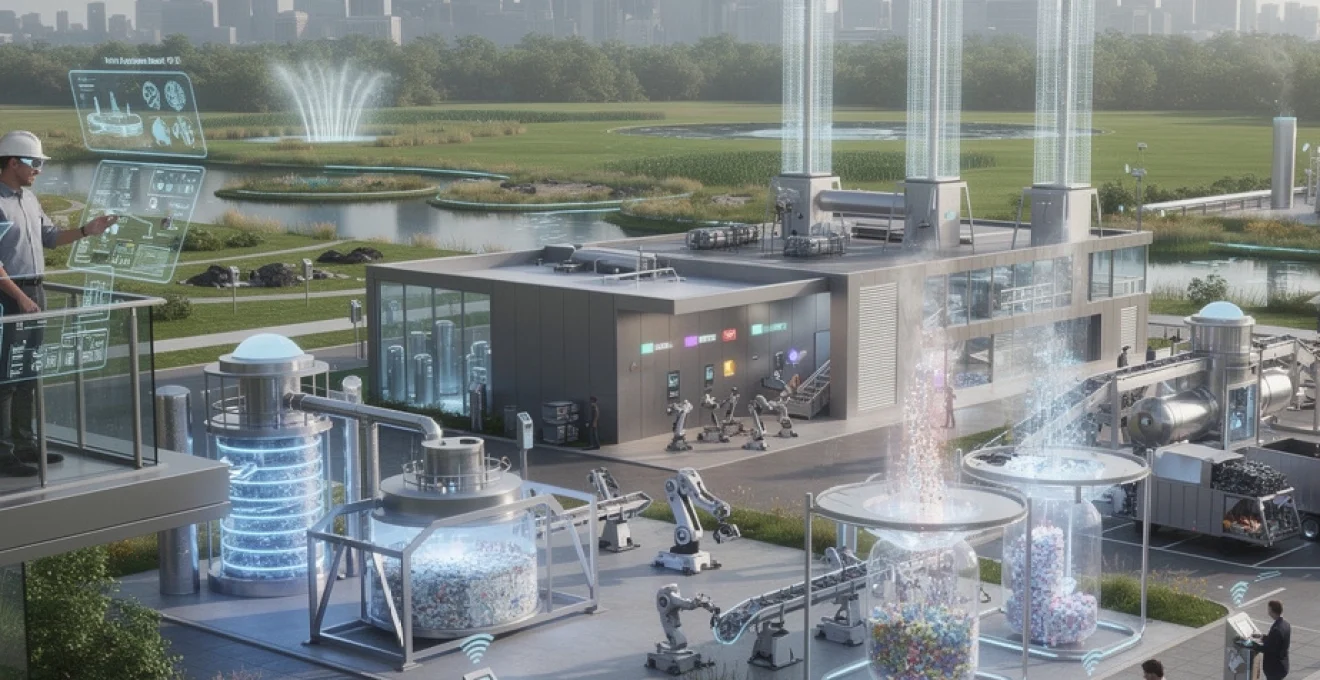
The global waste crisis has reached unprecedented levels, with the world generating over 2 billion tonnes of municipal solid waste annually. Traditional disposal methods are rapidly becoming unsustainable, creating an urgent need for transformative solutions that can address both environmental concerns and resource scarcity. Modern waste management innovation represents a paradigm shift from linear disposal models to sophisticated circular systems that transform waste streams into valuable resources.
Emerging technologies are revolutionising how communities and industries approach waste processing, moving beyond simple collection and landfilling towards intelligent resource recovery systems. These innovations combine artificial intelligence, advanced thermal treatment, and biotechnology to create integrated solutions that maximise material value whilst minimising environmental impact. The convergence of IoT sensors, predictive analytics, and automated sorting technologies is enabling waste management facilities to operate with unprecedented efficiency and environmental performance.
Contemporary waste management systems are increasingly designed around principles of sustainability and resource conservation, incorporating everything from plasma gasification to microbial fuel cells. This technological evolution is fundamentally reshaping municipal solid waste processing, creating opportunities for energy generation, material recovery, and carbon sequestration that were previously unimaginable. The integration of these advanced systems represents a critical step towards achieving circular economy objectives whilst addressing climate change mitigation goals.
Advanced Waste-to-Energy technologies transforming municipal solid waste processing
The transformation of municipal solid waste into usable energy has evolved dramatically beyond conventional incineration, with sophisticated thermal treatment technologies now capable of achieving remarkable efficiency rates. Modern waste-to-energy facilities are implementing advanced emission control systems that can reduce pollutant output by over 99%, whilst simultaneously generating enough electricity to power thousands of homes from residual waste streams.
Thermochemical conversion processes are becoming increasingly sophisticated, with facilities now capable of processing diverse waste streams that previously required separate treatment pathways. These integrated systems can handle everything from organic kitchen waste to complex polymer materials, breaking them down at the molecular level to extract maximum energy value whilst ensuring minimal environmental impact.
Plasma gasification systems for High-Temperature waste conversion
Plasma gasification represents one of the most advanced thermal treatment technologies available, operating at temperatures exceeding 3,000°C to completely break down waste materials into their constituent elements. This extreme heat environment ensures that virtually any organic material is converted into synthetic gas, whilst inorganic components are vitrified into an inert glass-like substance that poses no environmental risk.
The synthetic gas produced through plasma gasification can be utilised for electricity generation, converted into hydrogen fuel, or processed into various chemical feedstocks for manufacturing. Modern plasma systems achieve energy recovery rates of up to 85%, significantly outperforming traditional incineration whilst producing minimal emissions. The vitrified slag byproduct has commercial value as an aggregate material for construction applications, creating additional revenue streams for waste management facilities.
Anaerobic digestion optimisation through biogas recovery networks
Anaerobic digestion technology has undergone substantial improvements through the integration of multi-stage processing systems that optimise biogas production from organic waste streams. Contemporary facilities employ sophisticated pH monitoring, temperature control, and nutrient balancing to maximise methane yields whilst reducing processing times by up to 40%.
Advanced biogas upgrading systems now enable the production of biomethane that meets natural gas quality standards, allowing direct injection into existing gas distribution networks. These integrated systems can process food waste, agricultural residues, and sewage sludge simultaneously, creating synergistic effects that enhance overall system performance. The digestate byproduct provides high-quality soil amendment that supports sustainable agriculture practices, completing the circular resource loop.
Pyrolysis technology integration in covanta energy facilities
Pyrolysis systems operating at moderate temperatures between 400-600°C are being integrated into existing waste management infrastructure to process materials that are challenging for conventional recycling. These systems excel at breaking down complex polymer materials, converting them into valuable chemical feedstocks and synthetic fuels without the high energy requirements of plasma gasification.
The modular nature of modern pyrolysis systems allows for flexible deployment across different facility sizes, from small community installations to large-scale industrial operations. Recent developments in continuous feed pyrolysis reactors have improved processing capacity by over 60% whilst reducing maintenance requirements. The
resulting oil, gas, and char fractions can be tailored by adjusting residence time and temperature profiles, enabling facilities to match outputs with specific industrial demands. When integrated into Covanta-style energy-from-waste plants, pyrolysis units can pre-treat certain waste fractions, reducing overall moisture content and enhancing the calorific value of residual streams. This hybrid configuration improves boiler efficiency, extends plant life by reducing corrosion, and supports diversified revenue through the sale of recovered waxes, oils, and monomers. As global markets increasingly value low-carbon feedstocks, such integrated pyrolysis technology is becoming a strategic asset for municipal waste management authorities seeking both environmental and economic performance.
Mechanical biological treatment enhancement via AI-driven sorting
Mechanical biological treatment (MBT) facilities traditionally rely on mechanical screens, magnets, and manual picking to separate recyclables from mixed municipal waste before biological stabilisation. Today, AI-driven sorting systems are transforming this stage by using computer vision, machine learning, and robotics to recognise and extract high-value materials with far greater accuracy. Cameras and near-infrared (NIR) sensors mounted above conveyor belts feed real-time data to AI models, which identify plastics, metals, paper grades, and even composite materials that previously slipped through as residual waste.
Robotic arms and automated air jets then remove target items at high speed, increasing recovery rates for recyclables and reducing contamination in downstream biological processes. This not only boosts the quality of compost-like outputs but also minimises the volume of material requiring final disposal or incineration. In some leading European MBT plants, AI-enhanced sorting has raised material recovery rates by 15–25%, supporting municipal zero-waste targets and tightening compliance with landfill diversion regulations.
By coupling AI sorting with dynamic process control, MBT operators can continuously adjust shredder settings, conveyor speeds, and aeration regimes based on real-time feedstock composition. Think of it as giving your waste facility a “digital nervous system” that senses, learns, and responds to changing waste streams. For local authorities and private operators alike, this approach provides a scalable way to handle increasing waste complexity while keeping operational costs under control.
Circular economy implementation through smart recycling infrastructure
Circular economy strategies demand more than isolated recycling projects; they require integrated infrastructure that keeps materials circulating at their highest value for as long as possible. Smart recycling systems combine policy instruments, advanced processing technologies, and data-driven logistics to close resource loops across entire value chains. From consumer packaging to electronic waste, the focus is shifting towards designing products for recovery and building the digital and physical networks needed to capture them efficiently.
As you explore modern waste management options, you will see a growing emphasis on extended producer responsibility, chemical recycling, and reverse logistics. These elements work together to ensure that what was once considered “end-of-life” becomes the starting point for new production cycles. In practice, this means brands funding take-back systems, recyclers deploying high-precision separation equipment, and cities integrating smart containers and collection services into urban planning.
Extended producer responsibility frameworks in TerraCycle programmes
Extended Producer Responsibility (EPR) shifts the financial and operational burden of waste management from municipalities to the companies that place products on the market. TerraCycle’s programmes provide a practical example of how EPR can operate in a circular economy context, particularly for hard-to-recycle items such as multi-layer packaging, coffee capsules, and personal care products. Under these schemes, brands sponsor collection points and mail-back systems, funding the sorting and processing of materials that would otherwise go to landfill or incineration.
By aggregating niche waste streams at scale, TerraCycle can justify the use of specialised recycling technologies and create secondary raw materials for new products. Producers benefit from improved sustainability credentials and more predictable compliance with evolving packaging regulations. At the same time, consumers gain accessible drop-off locations and clear guidance on how to participate, strengthening engagement with brand-led recycling initiatives.
For policymakers and corporate sustainability teams, EPR frameworks like those employed by TerraCycle demonstrate how regulatory incentives and voluntary programmes can align. When you design packaging with recyclability in mind and back it with funded take-back systems, waste becomes a managed resource rather than an uncontrolled liability. Over time, data from these programmes also helps brands refine material choices and reduce unnecessary packaging, reinforcing upstream waste prevention.
Chemical recycling advancements for PET and HDPE polymer recovery
Mechanical recycling has long been the backbone of plastic recovery, yet it struggles with contaminated, coloured, or multi-layer materials. Chemical recycling technologies are emerging as a complementary solution, particularly for PET and HDPE polymers found in bottles, trays, and rigid containers. Processes such as depolymerisation, glycolysis, and solvolysis can break plastics down into their basic monomers, which are then purified and re-polymerised into virgin-equivalent resin.
This “molecule-level” reset enables infinite recycling loops for certain polymers, avoiding the downcycling often seen in traditional processes. For PET, advanced depolymerisation plants now convert mixed or low-grade feedstock into purified terephthalic acid (PTA) and ethylene glycol, which can re-enter bottle-grade production. Similarly, HDPE can be treated through pyrolysis and catalytic cracking to yield high-quality naphtha and olefins that feed into new plastic manufacturing streams.
Of course, chemical recycling is not a silver bullet; energy use, lifecycle emissions, and economic viability must be carefully assessed through independent studies. However, when integrated into broader waste management innovation strategies, these technologies unlock recovery pathways for plastics that were previously considered non-recyclable. For brand owners seeking to meet ambitious recycled content and plastic reduction targets, chemical recycling offers an additional lever—especially when paired with robust design-for-recycling principles and clear consumer labelling.
Reverse logistics networks in WEEE collection systems
Waste electrical and electronic equipment (WEEE) presents unique challenges due to its mix of metals, plastics, glass, and hazardous components such as batteries and circuit boards. Reverse logistics networks are increasingly being deployed to capture these valuable materials at end-of-life and return them to specialised treatment plants. Rather than following a one-way path from factory to consumer to landfill, electronic products now move through a multi-stage route that includes repair centres, refurbishment hubs, and certified dismantling facilities.
Manufacturers, retailers, and logistics providers collaborate to establish collection points in stores, municipal depots, and even at the doorstep via take-back-on-delivery schemes. Collected devices are triaged: some are refurbished for reuse, others stripped for spare parts, and the remainder dismantled for material recovery. This approach not only reduces e-waste volumes but also supports secondary markets for refurbished electronics, extending product lifespans and lowering the demand for virgin raw materials such as rare earth elements.
In well-designed WEEE systems, data plays a pivotal role. Serial numbers, barcodes, and embedded RFID tags help track devices through the reverse chain, ensuring traceability and compliance with regulations such as the EU’s WEEE Directive. For your organisation, participating in or designing such reverse logistics programmes can significantly improve ESG performance and demonstrate responsible product stewardship in a sector under close environmental scrutiny.
Material recovery facility automation using optical sorting technology
Material Recovery Facilities (MRFs) are the beating heart of modern recycling infrastructure, and automation is rapidly redefining what they can achieve. Optical sorting technology—using a combination of NIR sensors, hyperspectral imaging, and high-speed cameras—can identify materials based on their spectral signatures in milliseconds. Air jets or mechanical actuators then divert specific fractions, such as PET bottles, aluminium cans, or coloured glass, into dedicated streams.
Automated MRFs can process thousands of items per minute with precision levels that far exceed manual sorting, even under variable feed conditions. This leads to cleaner bales, higher commodity values, and reduced rejection rates at downstream reprocessors. In some facilities, optical sorters are complemented by AI-driven robots that specialise in “last chance” recovery, plucking remaining valuables from residual lines that would otherwise be destined for disposal.
For municipalities and private operators, investing in optical sorting represents a strategic decision to future-proof recycling systems against rising volumes and changing packaging designs. While capital expenditure can be substantial, the long-term benefits—improved yield, lower labour risk, and greater flexibility to adapt to new materials—are increasingly compelling. When paired with clear household collection schemes and public education, automated MRFs form a critical pillar of truly circular waste management innovation.
Iot-enabled smart bin networks and predictive collection systems
IoT-enabled smart bin networks are reshaping how cities and commercial sites manage everyday waste and recycling. Equipped with ultrasonic fill-level sensors, weight cells, and sometimes contamination detectors, smart containers transmit real-time data on their status via cellular or low-power wide-area networks. This information feeds into central dashboards where waste operators can visualise which bins are nearing capacity, which are underutilised, and where contamination hotspots are emerging.
Predictive collection systems take this a step further by applying machine learning algorithms to historical and real-time data. By factoring in variables such as day of the week, weather patterns, seasonal events, and local footfall, these systems can forecast when specific bins will require servicing. Collection routes are then dynamically optimised so that vehicles only visit containers that truly need attention, reducing unnecessary mileage, fuel consumption, and associated emissions.
Imagine your city’s waste fleet operating more like an on-demand delivery service than a fixed weekly schedule. Not only does this improve operational efficiency—studies report route length reductions of up to 30%—but it also prevents overflowing bins that contribute to litter, odours, and vermin. For facility managers, integrating smart bins into building management systems can also support granular reporting on recycling rates and help identify opportunities for targeted behaviour-change campaigns among occupants.
Of course, successful deployment requires attention to data security, sensor durability, and interoperability with existing fleet management platforms. Yet as sensor costs continue to fall and connectivity improves, IoT-based waste management innovation is rapidly moving from pilot projects to standard practice in forward-thinking municipalities and enterprises.
Bioremediation technologies for landfill leachate management
Landfill leachate—often described as the “liquid fingerprint” of a landfill—can contain a complex mix of organic pollutants, heavy metals, and emerging contaminants such as PFAS. Managing this highly variable wastewater stream is essential to protecting groundwater and surrounding ecosystems. Bioremediation technologies leverage naturally occurring or engineered microorganisms to break down contaminants into less harmful substances, offering a more sustainable alternative to purely chemical or physical treatments.
Constructed wetlands are one widely adopted approach, using carefully designed combinations of plants, soil, and microbial communities to treat leachate in staged cells. As leachate flows through, microbes degrade organic matter while plants uptake nutrients and certain metals, steadily improving water quality. In parallel, advanced bioreactors—such as moving bed biofilm reactors (MBBRs) and membrane bioreactors (MBRs)—provide controlled environments where specialised bacteria can target specific contaminants under optimised conditions.
Modern systems increasingly employ real-time monitoring and adaptive control. Sensors track parameters such as dissolved oxygen, oxidation-reduction potential, and nutrient levels, enabling operators to fine-tune aeration and dosing regimes. Think of it as providing “life support” to microbial communities so they can work at peak efficiency. For landfill operators, this translates into more consistent compliance with discharge standards and reduced reliance on costly off-site treatment.
While bioremediation may not fully eliminate all trace contaminants on its own, especially persistent compounds, it can substantially reduce pollutant loads and operating costs when integrated into a multi-barrier treatment train. As regulatory scrutiny on leachate intensifies worldwide, these biologically based solutions are set to play an ever-greater role in holistic landfill environmental management.
Carbon capture integration in waste treatment facilities
As waste-to-energy plants, anaerobic digestion sites, and other treatment facilities work to reduce their climate impact, carbon capture technologies are emerging as a powerful addition to the waste management innovation toolkit. Unlike conventional industrial emitters that rely entirely on fossil feedstocks, many waste facilities process biogenic material, meaning that captured CO2 can represent a net-negative emission when permanently stored or converted. Integrating carbon capture into waste infrastructure therefore offers a unique opportunity to align resource recovery with ambitious decarbonisation targets.
Practical integration pathways range from post-combustion capture on flue gases to upgrading biogas streams so that separated CO2 can be compressed, utilised, or sequestered. The crucial question for facility operators is not just whether capture is technically feasible, but how it can be implemented in a way that is cost-effective, resilient, and compatible with existing plant layouts. Recent pilot projects by major environmental services companies suggest that modular capture units, shared CO2 pipelines, and partnerships with industrial CO2 users are key enablers.
Direct air capture systems at veolia treatment plants
Direct Air Capture (DAC) technology removes CO2 directly from ambient air using specialised sorbent materials or liquid solvents. While DAC is often associated with standalone facilities in remote locations, some operators are exploring its integration at waste treatment sites. Veolia, for example, has investigated the potential for co-locating DAC units at energy-from-waste plants and industrial water treatment facilities where low-grade waste heat is readily available.
Using surplus thermal energy to power the regeneration of sorbents can significantly improve the energy balance and economics of DAC. Captured CO2 can then be compressed for geological storage or supplied to nearby industries for use in greenhouses, building materials, or synthetic fuels. In this way, waste facilities become not only processors of material residuals but also hubs of atmospheric carbon removal, contributing directly to climate mitigation efforts.
While large-scale deployment of DAC remains in its early stages and costs are still relatively high, early integration with existing infrastructure can accelerate learning curves and reduce duplication of utilities. For municipalities and industrial clients working with operators like Veolia, participation in DAC demonstration projects offers a way to future-proof assets and explore new revenue models linked to carbon credits and negative-emission services.
Methane oxidation enhancement through microbial fuel cells
Methane is a potent greenhouse gas, with a global warming potential more than 25 times that of CO2 over a 100-year period. Landfills and anaerobic treatment systems are significant methane sources, even when gas capture systems are in place. Microbial fuel cells (MFCs) present an innovative solution by harnessing electrogenic microorganisms that can oxidise methane or other organic compounds while generating an electrical current.
In a landfill or leachate treatment context, MFCs consist of an anode chamber where microbes consume organic substrates and a cathode chamber where electrons complete the circuit, often reducing oxygen. As methane and other organics are metabolised, electrons flow through an external circuit, producing low-voltage electricity that can power sensors, remote monitoring equipment, or small actuators on-site. This turns a pollution problem into a source of distributed, renewable micro-power.
Recent research has focused on enhancing electron transfer efficiency, optimising electrode materials, and integrating MFCs with existing gas collection and drainage systems. Think of MFCs as “living batteries” quietly working at the interface of waste and water. Although commercial-scale deployment is still emerging, pilot projects suggest that, when combined with conventional gas capture, MFCs can further reduce fugitive methane emissions and improve the overall environmental footprint of landfill operations.
Carbon sequestration via biochar production from organic waste
Biochar production offers a practical and scalable route to sequester carbon from organic waste while generating valuable soil amendments. Produced by pyrolysing biomass—such as green waste, agricultural residues, or digestate from anaerobic digestion—under low-oxygen conditions, biochar locks carbon into a stable, aromatic structure that can persist in soils for hundreds to thousands of years. When applied to land, it not only stores carbon but can also improve water retention, nutrient availability, and soil biodiversity.
Integrating biochar kilns into existing organic waste processing facilities allows operators to handle woody fractions and oversize compost materials that are otherwise difficult to manage. The process generates syngas and bio-oil alongside the solid char, which can be used to provide heat and power for on-site operations or fed into broader energy networks. In essence, you convert problematic organic residues into three outputs: renewable energy, climate-positive carbon storage, and enhanced soil health.
From a climate accounting perspective, biochar is increasingly recognised as a negative-emission technology, and verified carbon credit methodologies are emerging to quantify its sequestration benefits. For municipalities and businesses exploring advanced waste management innovation, biochar projects can therefore offer both environmental and financial returns. As with any land-based intervention, careful assessment of feedstock sustainability, application rates, and local agronomic conditions is essential—but when well designed, biochar systems embody the circular economy in action: turning waste into a long-lived resource that supports ecosystems and communities alike.