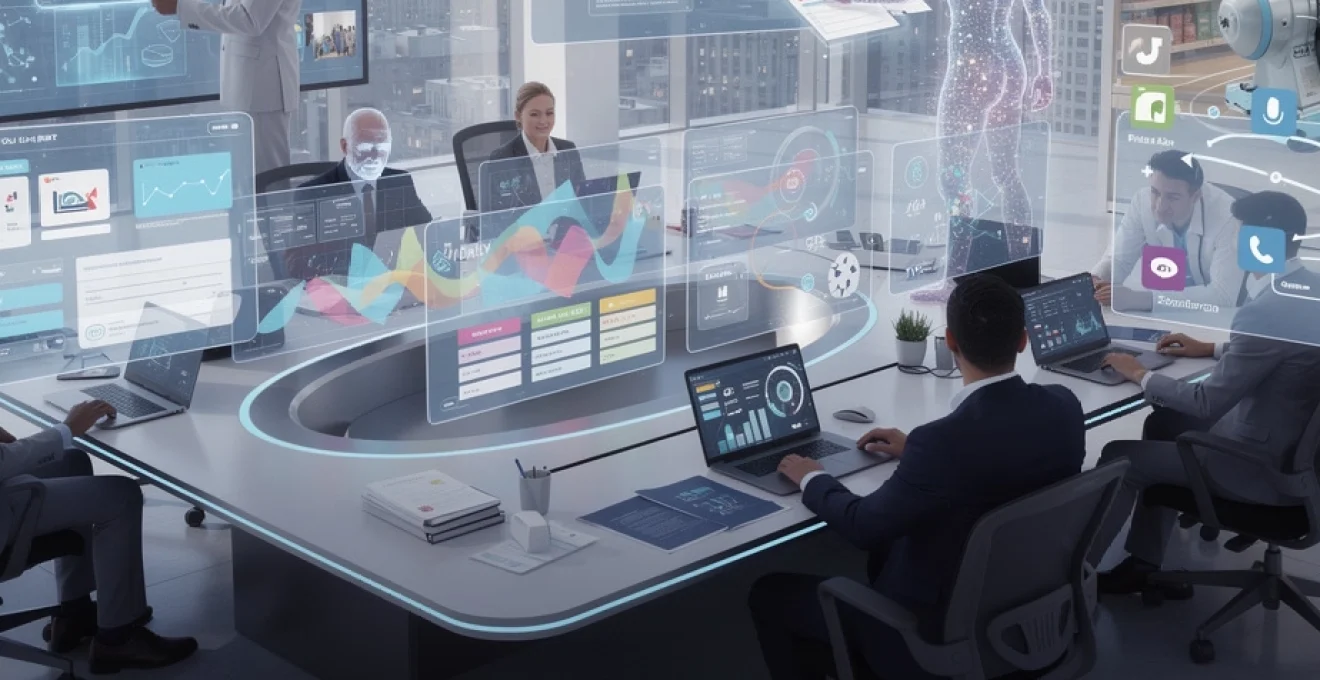
The transformation of traditional office environments into sophisticated digital ecosystems has fundamentally altered how organisations operate, collaborate, and deliver value. Modern digital workplaces leverage cutting-edge technologies to create seamless, efficient work environments that transcend geographical boundaries and time zones. This revolutionary shift has enabled businesses to harness unprecedented levels of productivity while maintaining operational flexibility and employee satisfaction.
Digital workplace solutions integrate cloud computing, artificial intelligence, advanced analytics, and robust security frameworks to create comprehensive platforms that support diverse business needs. From multinational corporations to small enterprises, organisations across industries are discovering that strategic digital transformation drives measurable improvements in operational efficiency, employee engagement, and competitive advantage.
The convergence of remote work demands, technological advancement, and evolving business expectations has accelerated the adoption of sophisticated digital workplace platforms. These environments facilitate real-time collaboration, automate routine processes, and provide intelligent insights that enable data-driven decision-making across all organisational levels.
Cloud-based collaboration platforms transforming remote work efficiency
Cloud-based collaboration platforms have emerged as the backbone of modern digital workplaces, fundamentally reshaping how teams interact, share information, and execute projects. These platforms eliminate traditional barriers to productivity by providing universal access to tools, documents, and communication channels from any device or location.
The scalability and flexibility offered by cloud-based solutions enable organisations to adapt quickly to changing business requirements whilst maintaining consistent performance standards. Unified communication systems integrate video conferencing, instant messaging, file sharing, and project management capabilities into cohesive platforms that streamline workflow processes and reduce technology complexity.
Microsoft teams integration with power platform for automated workflows
Microsoft Teams’ integration with the Power Platform represents a significant advancement in workplace automation capabilities. This powerful combination enables organisations to create sophisticated automated workflows directly within their collaboration environment. Teams users can now trigger Power Automate flows, access Power BI dashboards, and interact with custom Power Apps without leaving their communication platform.
The Power Platform integration allows for seamless data flow between different business applications, creating end-to-end process automation that significantly reduces manual intervention. For instance, approval processes can be automatically initiated when documents are shared in Teams channels, with stakeholders receiving notifications and being able to approve requests directly within the chat interface.
Slack connect Cross-Organisational communication protocols
Slack Connect has revolutionised external collaboration by enabling secure communication channels between different organisations. This feature addresses the growing need for efficient partner, vendor, and client communication whilst maintaining robust security standards. Companies can now create shared channels that facilitate real-time collaboration on joint projects without compromising sensitive internal communications.
The platform’s advanced permission controls and audit capabilities ensure that cross-organisational communication remains compliant with regulatory requirements. Channel-specific governance policies can be implemented to control information sharing, maintain confidentiality, and track collaboration metrics across different partner relationships.
Asana project management API integration with CRM systems
Asana’s robust API integration capabilities have transformed project management by connecting work execution directly with customer relationship management systems. This integration enables teams to automatically create project tasks based on CRM activities, track project progress in relation to client milestones, and generate comprehensive reports that combine project data with customer insights.
The seamless data synchronisation between Asana and CRM platforms eliminates duplicate data entry and ensures that project timelines align with customer expectations. Sales teams can access real-time project status updates, whilst project managers gain visibility into customer communication history and requirements changes.
Zoom workplace analytics dashboard for meeting optimisation
Zoom’s advanced analytics dashboard provides organisations with detailed insights into meeting patterns, attendance rates, and collaboration effectiveness. These analytics help identify opportunities to optimise meeting cadence, reduce unnecessary gatherings, and improve overall communication efficiency. The platform tracks metrics such as average meeting duration, participant engagement levels, and resource utilisation.
Meeting optimisation through data-driven insights has become crucial for maintaining productivity in hybrid work environments. Intelligent scheduling recommendations based on historical data help teams find optimal meeting times, whilst engagement metrics provide feedback on meeting effectiveness and participant satisfaction levels.
Ai-powered digital assistants streamlining administrative tasks
Microsoft copilot natural language processing for document generation
AI-powered digital assistants such as Microsoft Copilot are redefining how knowledge workers handle everyday documentation tasks. By leveraging advanced natural language processing, Copilot can generate first drafts of reports, presentations, and emails based on simple prompts or existing organisational data. Users can ask Copilot to summarise lengthy documents, extract key actions from meeting transcripts, or reformat content for different audiences, all without leaving familiar tools like Word, Excel, or PowerPoint.
This capability dramatically reduces the time spent on low-value formatting and drafting, allowing employees to focus on analysis and decision-making. For example, rather than manually compiling monthly performance summaries, teams can instruct Copilot to pull data from connected systems and produce a structured report. Organisations that embrace AI document generation within their digital workplace often see faster turnaround times, more consistent communication, and fewer bottlenecks in content-heavy workflows.
Google workspace AI smart compose and grammar suggestions
Within Google Workspace, AI-driven features such as Smart Compose and grammar suggestions quietly streamline day-to-day communication. These tools predict what you are likely to type next and correct errors in real time, cutting down on repetitive keystrokes and reducing time spent editing emails, documents, and chat messages. For employees managing high volumes of correspondence, those incremental savings quickly add up to significant productivity gains.
Beyond speed, these AI features also help ensure clarity and professionalism across distributed teams. Consistent tone, fewer errors, and clearer phrasing enhance collaboration, particularly when teams are working across time zones and rely heavily on written communication. When integrated into a broader digital workplace strategy, Google’s AI-assisted writing becomes a simple yet powerful lever for improving the quality and efficiency of everyday interactions.
Notion AI database query automation and content creation
Notion AI extends the capabilities of digital workplaces by combining knowledge management, databases, and AI-driven content creation in a single unified environment. Teams can query internal databases using natural language, asking questions such as “show all projects due this quarter” or “summarise customer feedback from last month,” without needing complex filters or formulas. This reduces friction when searching for information and supports real-time decision-making based on up-to-date data.
In addition, Notion AI can generate meeting notes, project briefs, and documentation directly within existing workspaces. Instead of starting from a blank page, users can request outlines, summaries, or alternative versions of content tailored to different stakeholders. This combination of database query automation and AI content creation turns Notion into a dynamic knowledge hub, ensuring that information is not only stored centrally but is also easy to surface, understand, and reuse.
Calendly intelligent scheduling algorithms for meeting coordination
Coordinating meetings across distributed teams and external stakeholders is a major source of hidden administrative overhead. Calendly tackles this challenge with intelligent scheduling algorithms that automatically identify suitable time slots based on participants’ availability, time zones, and preferences. Instead of exchanging multiple emails to find a mutually convenient time, users simply share a link and allow the system to handle the complexity.
For organisations scaling remote or hybrid work, this automation can save hours each week per employee. When integrated into a broader digital workplace stack—synchronising with calendars, video conferencing platforms, and CRM systems—Calendly helps ensure that meetings are not only easier to book but also better aligned with business priorities. You can, for example, prioritise strategic client calls over internal meetings, ensuring that time is consistently invested where it delivers the most value.
Industry-specific digital transformation case studies
While the core principles of a digital workplace apply across sectors, each industry faces unique regulatory, operational, and customer expectations. As a result, the most effective digital workplace strategies are those tailored to specific sector challenges. From healthcare to retail, organisations are combining collaboration platforms, AI, automation, and data analytics to unlock new levels of productivity and service quality.
Understanding how different industries apply digital workplace technologies can help you benchmark your own transformation journey. Are your tools simply digitising old processes, or are they enabling new, more efficient ways of working? The following sector case studies highlight how targeted digital initiatives can deliver measurable gains in productivity, compliance, and customer experience.
Healthcare sector electronic health records integration with telemedicine platforms
In healthcare, integrating Electronic Health Records (EHR) with telemedicine platforms has been a pivotal step in building a truly digital workplace. Clinicians can now access patient histories, test results, and medication records within the same interface used for virtual consultations. This reduces the need to switch between systems, shortens appointment times, and minimises the risk of errors caused by fragmented information.
For example, a teleconsultation platform integrated with EHR can automatically surface relevant clinical data and prompt clinicians with evidence-based treatment guidelines. After the consultation, notes and prescriptions are instantly added to the patient’s record, reducing administrative burden and improving continuity of care. This integrated digital ecosystem not only enhances productivity for clinicians but also improves patient satisfaction by offering faster, more convenient access to healthcare services.
Financial services robotic process automation for compliance reporting
Financial services organisations face stringent regulatory obligations, with compliance reporting often consuming substantial manual effort. By deploying Robotic Process Automation (RPA) within their digital workplace, many firms now automate data extraction, reconciliation, and report generation across multiple systems. Software robots can log into legacy platforms, gather required data, and populate templates with minimal human intervention.
This automation significantly reduces processing times and error rates, while also providing detailed audit trails to support regulatory reviews. Analysts and compliance officers can then focus on interpreting results, investigating anomalies, and strengthening risk controls rather than compiling spreadsheets. As a result, financial institutions gain a more agile, resilient compliance function capable of keeping pace with evolving regulations and market conditions.
Manufacturing industry IoT sensors and predictive maintenance systems
In manufacturing, digital workplaces extend beyond office-based staff to the factory floor through IoT sensors and predictive maintenance systems. Connected sensors continuously monitor equipment performance, capturing data on temperature, vibration, and utilisation. This information is fed into analytics platforms that predict when a machine is likely to fail, allowing maintenance teams to intervene before downtime occurs.
By integrating these predictive insights into collaboration tools and work management systems, manufacturers can coordinate maintenance tasks more efficiently. Technicians receive automated alerts and work orders, while production planners can adjust schedules to minimise disruption. The result is a digital workplace where information flows seamlessly between operations, engineering, and management, driving higher asset uptime and more predictable output.
Retail omnichannel customer experience management platforms
Retailers are using digital workplaces to orchestrate seamless omnichannel customer experiences across online and offline touchpoints. Centralised customer data platforms integrate e-commerce, in-store POS systems, marketing tools, and loyalty programmes to provide a 360-degree view of each customer. Store associates, call centre agents, and digital teams can all access the same up-to-date information on orders, preferences, and interactions.
This unified view enables more personalised service, faster issue resolution, and coordinated promotions across channels. For instance, a customer browsing online can receive tailored recommendations based on in-store purchases, while returns can be processed effortlessly regardless of the purchase channel. Behind the scenes, digital workplace tools streamline communication between merchandising, logistics, and customer service teams, ensuring that inventory, pricing, and messaging remain consistent and efficient.
Real-time data analytics and business intelligence integration
Real-time data analytics has become a cornerstone of high-performing digital workplaces. Rather than relying on static, end-of-month reports, organisations increasingly embed business intelligence dashboards directly into their collaboration tools and enterprise applications. This means decision-makers at every level can monitor KPIs, track operational performance, and respond to emerging trends as they happen.
Modern BI platforms such as Power BI, Tableau, and Looker connect to multiple data sources—from ERP and CRM systems to IoT devices and HR platforms—creating a single source of truth. When integrated into digital workplace hubs like Microsoft Teams or Slack, these dashboards become part of the daily workflow. Teams can discuss insights in context, annotate charts, and turn data-driven observations into actionable tasks without leaving their workspace.
However, the real productivity gains emerge when analytics move from descriptive to predictive and prescriptive insights. Advanced models can forecast demand, identify at-risk customers, or flag potential supply chain disruptions, allowing you to take proactive action. Think of it as moving from looking in the rear-view mirror to having a real-time navigation system that suggests the best route ahead. Organisations that build data literacy across their workforce and encourage employees to engage with BI tools often see faster, more confident decision-making and a measurable uplift in performance.
Cybersecurity framework implementation for digital workplace infrastructure
As digital workplaces expand, so does the attack surface for cyber threats. Remote access, cloud storage, and third-party integrations all introduce new risks that must be managed carefully. A robust cybersecurity framework is therefore essential to safeguard sensitive data, maintain regulatory compliance, and preserve trust across stakeholders. Without it, even the most advanced digital workplace can quickly become a liability rather than a productivity enabler.
Leading organisations adopt a layered security approach that combines identity and access management, endpoint protection, encryption, and continuous monitoring. Zero-trust principles—where every user, device, and connection is treated as untrusted until verified—are increasingly becoming the norm. Multi-factor authentication, conditional access policies, and role-based permissions ensure that employees can access the tools they need without exposing critical systems to unnecessary risk.
Security controls are most effective when they are integrated seamlessly into everyday workflows. For instance, single sign-on reduces password fatigue while still enforcing strong authentication, and automated alerts can notify security teams of unusual behaviour without disrupting legitimate work. Just as important is building a culture of security awareness: regular phishing simulations, training, and clear incident response processes help employees understand their role in protecting the digital workplace. When security becomes an enabler rather than an obstacle, organisations can innovate with confidence.
Employee digital literacy training programmes and change management strategies
No digital workplace initiative can succeed without investing in people. Even the most intuitive tools require a foundation of digital literacy—the ability to use technology confidently, safely, and effectively. According to recent UK studies, a significant portion of the workforce still lacks essential digital skills, leading to slower processes, higher error rates, and underutilised technology investments. Bridging this gap is both a productivity imperative and a key driver of employee engagement.
Effective digital literacy programmes go beyond one-off training sessions. They combine structured learning—such as micro-learning modules, role-specific workshops, and self-paced courses—with ongoing support through champions, peer mentoring, and just-in-time resources. You might, for example, introduce short weekly sessions focused on practical topics like “Using Teams for project collaboration” or “Automating routine tasks with Power Automate,” helping employees apply skills directly to their daily work.
Equally critical is a thoughtful change management strategy. Digital transformation often requires employees to adopt new workflows, relinquish familiar tools, and trust automation for tasks they previously performed manually. To navigate this shift successfully, organisations should communicate a clear vision, involve end users early in tool selection and design, and gather continuous feedback. Techniques such as pilot programmes, phased rollouts, and visible executive sponsorship help build momentum and address resistance.
Ultimately, a digital workplace is as strong as the people who use it. When employees feel supported, trained, and heard, they are far more likely to embrace new technologies and explore innovative ways of working. By combining robust platforms with targeted upskilling and empathetic change management, organisations can turn digital workplaces into powerful engines of productivity across every industry.