# How Smart Devices Are Redefining Daily Convenience
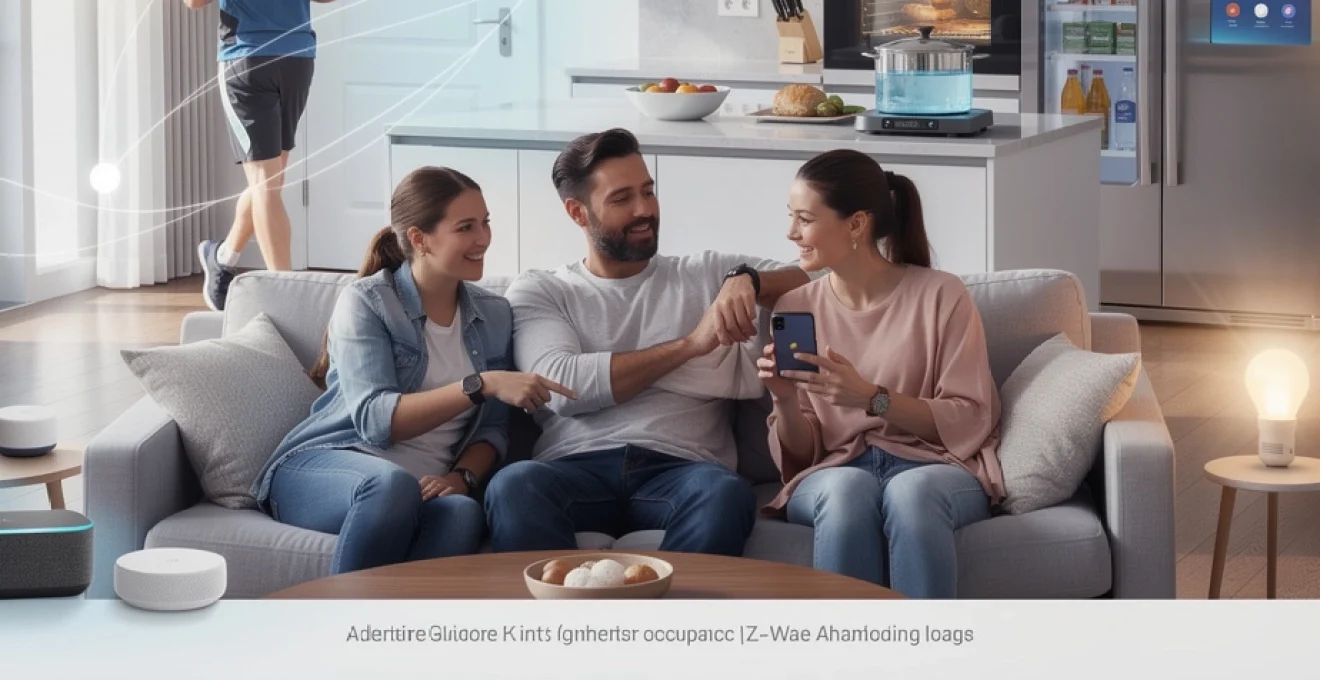
The modern home has transformed into an intelligent ecosystem where devices communicate seamlessly, anticipate needs, and operate with minimal human intervention. This paradigm shift represents far more than technological novelty—it fundamentally restructures how individuals interact with their living spaces. From precision-engineered kitchen appliances that eliminate culinary guesswork to climate systems that learn occupancy patterns, smart devices have evolved from luxury items into essential infrastructure for contemporary life. The convergence of artificial intelligence, sensor technology, and wireless connectivity has created environments that respond intuitively to human behaviour, delivering unprecedented levels of comfort, efficiency, and control.
Iot ecosystems and interoperability standards in modern smart homes
The true power of smart home technology emerges not from individual devices but from their collective orchestration. Modern IoT ecosystems depend on robust communication protocols that enable disparate products from multiple manufacturers to function cohesively. This interoperability challenge has driven the development of several competing and complementary standards, each designed to address specific technical requirements within connected home environments.
The fragmentation that once plagued early smart home adopters—where devices from different brands operated in isolated silos—has gradually diminished as industry leaders recognise the commercial imperative for unified systems. Today’s sophisticated networks allow thermostats, lighting, security cameras, and entertainment systems to share data and coordinate actions based on complex conditional logic. Yet achieving genuine convenience increasingly requires strategies for invisible smart home integration that preserve living spaces’ aesthetic character. This architectural evolution represents perhaps the most significant advancement in making smart technology genuinely convenient rather than merely novel.
Matter protocol integration across apple HomeKit, google home, and amazon alexa
The Matter protocol has emerged as the industry’s most promising universal standard, backed by the Connectivity Standards Alliance and supported by technology giants including Apple, Google, Amazon, and Samsung. This IPv6-based protocol allows devices certified under Matter to communicate seamlessly across platforms, eliminating the historical frustration of compatibility limitations. When you purchase a Matter-certified smart bulb, for instance, it will function identically whether controlled through Apple HomeKit, Google Home, or Amazon Alexa ecosystems without requiring separate setup procedures for each platform.
Matter’s architecture operates on local networks whenever possible, reducing latency and enhancing privacy by minimising cloud dependencies. This approach addresses two critical consumer concerns simultaneously: response speed and data security. The protocol’s emphasis on interoperability fundamentally changes the purchasing calculus for consumers, who can now select devices based on features and price rather than ecosystem compatibility. Industry analysts project that Matter-certified devices will comprise approximately 60% of all smart home products shipped by 2026, reflecting widespread manufacturer adoption and consumer demand for unified systems.
Zigbee and Z-Wave mesh network architecture for device communication
Before Matter’s ascendancy, Zigbee and Z-Wave established themselves as the dominant wireless protocols for smart home devices, particularly for battery-operated sensors, switches, and locks. Both employ mesh network topology, where each powered device acts as a signal repeater, extending range and enhancing reliability throughout the home. This architecture proves particularly valuable in larger properties or those with challenging construction materials that impede wireless signals.
Zigbee operates on the 2.4 GHz frequency band, offering faster data transmission but potentially encountering interference from Wi-Fi networks and Bluetooth devices. Z-Wave utilises sub-1 GHz frequencies (typically 868 MHz in Europe and 908 MHz in North America), providing superior building penetration and reduced interference at the cost of slightly slower data rates. The practical difference for most applications remains negligible; a Zigbee light switch responds as instantaneously as its Z-Wave equivalent. However, Z-Wave’s strict certification process and lower device limits per network (232 compared to Zigbee’s 65,000) create distinct architectural considerations for extensive installations.
The mesh topology inherent to both protocols delivers remarkable resilience. If one device fails or loses power, the network automatically reconfigures signal paths through alternative routes, maintaining connectivity for the broader system. This self-healing capability ensures that temporary disruptions don’t cascade into complete system failures, a critical reliability feature for security and safety applications.
Thread border routers and IPv6-Based Low-Power connectivity
Thread represents a newer mesh networking protocol specifically designed for IoT devices, combining the low-power characteristics of Zigbee with IPv6 native addressing
and end-to-end encryption typically associated with enterprise-grade networks. By leveraging IPv6, each Thread device can have its own unique address on the network, simplifying routing and enabling direct, secure communication without complicated workarounds. In practice, this means a battery-powered motion sensor can talk to a smart light or alarm system quickly and reliably, even in a dense environment with dozens of nodes.
Thread border routers—built into products like Apple HomePod mini, Google Nest Wifi Pro, and certain smart hubs—act as bridges between the low-power Thread mesh and your regular Wi‑Fi network. They translate traffic while preserving the benefits of local processing, so automations still run even if your internet connection drops. For homeowners, the advantage is subtle but powerful: devices become more responsive, less dependent on the cloud, and easier to scale without sacrificing battery life or stability.
IFTTT automation and cross-platform device orchestration
While standards like Matter and Thread solve the problem of basic connectivity, many users still want complex routines that span brands, apps, and even web services. This is where automation platforms such as IFTTT (If This Then That) come into play, acting as a kind of universal glue between otherwise separate ecosystems. With an IFTTT applet, you can have your Philips Hue lights flash when your Ring doorbell detects motion, log thermostat changes to a Google Sheet, or pause your robot vacuum when your smart TV turns on.
IFTTT operates on a simple trigger-and-action model, but beneath that simplicity lies a robust API-driven integration fabric. Each service exposes specific events and capabilities—such as « motion detected » or « set brightness to 50% »—which users can chain together without writing code. For busy households, these cross-platform workflows turn isolated conveniences into a fully orchestrated smart home experience: you might arrive home, have your door unlock, hallway lights turn on, and a preferred playlist start automatically, all based on a single trigger like your phone entering a geofenced area.
However, relying on cloud-based orchestration introduces latency and potential privacy considerations. Actions may take a second or two longer to execute, and events often pass through third-party servers. The most resilient setups therefore blend IFTTT-style cloud automations with local routines within platforms like Apple Home, SmartThings, or Home Assistant. By thoughtfully combining these tools, you can enjoy rich, cross-platform automation while keeping time-sensitive or privacy-critical tasks running locally.
Voice-activated AI assistants transforming household task management
Voice-activated AI assistants have become the de facto interface for many smart homes, turning spoken commands into automated routines that manage lights, appliances, reminders, and more. Instead of navigating multiple apps, you can simply ask to dim the living room, preheat the oven, or check whether the front door is locked. This shift from touchscreens to conversational interfaces has redefined daily convenience, especially for multitasking families, older adults, and people with reduced mobility.
Behind the scenes, these assistants connect to a growing ecosystem of smart devices, services, and cloud intelligence. They not only respond to explicit commands but increasingly anticipate needs based on context—time of day, location, previous patterns, and even who is speaking. As microphones become more accurate and algorithms more sophisticated, the smart home is moving from voice-controlled to truly voice-aware, offering help before you even think to ask.
Natural language processing advancements in siri, google assistant, and alexa
The evolution of natural language processing (NLP) has been central to making smart devices feel less like machines and more like collaborators. Early voice systems required rigid phrasing— »turn living room light on »—but modern assistants can interpret far more natural requests such as « could you make it a bit brighter in here? » or « it’s too warm in the bedroom. » Large language models and on-device neural networks allow Siri, Google Assistant, and Alexa to handle ambiguous phrasing, follow-up questions, and multi-step instructions in a single utterance.
Recent updates focus on running more NLP workloads locally, which improves both speed and privacy. For example, some platforms now process wake words and basic commands entirely on the device, reducing the amount of voice data sent to the cloud. This is especially important in a home filled with always-listening microphones. For everyday users, the benefit is tangible: faster responses, fewer misheard commands, and more confidence that private conversations are not being indiscriminately recorded.
These assistants are also becoming better at understanding multi-language households and regional accents. In markets like Europe and Southeast Asia, where bilingual and trilingual environments are common, assistants can now switch languages mid-conversation or interpret commands that mix English with local phrases. The result is a more inclusive smart home experience that reflects how people actually speak at home, rather than forcing them to adopt « robot-friendly » language.
Contextual awareness and predictive task scheduling algorithms
Beyond understanding individual commands, modern assistants increasingly rely on contextual awareness to streamline household routines. They can infer intent from factors like time, location, historical patterns, and device status. If you usually say « goodnight » around 11 p.m., for instance, the assistant can learn to dim lights, lock doors, and turn down the thermostat automatically when you use that phrase, without needing a complex manual setup.
Predictive task scheduling algorithms take this a step further by initiating actions proactively. Some platforms now suggest routines based on observed behaviour—such as recommending an automation that turns off all lights when everyone leaves the house, or nudging you to set up an announcement when the washing machine finishes. These algorithms work much like a digital butler, quietly learning your preferences and proposing time-saving shortcuts.
Of course, there is a delicate balance between helpful prediction and intrusive overreach. Many users are comfortable with assistants automating obvious tasks but less so with opaque decision-making based on extensive data profiling. The most user-friendly systems therefore combine predictive insights with clear controls and opt-in prompts, allowing you to decide which automations run automatically and which remain under explicit voice control.
Multi-room audio synchronisation with sonos and echo spatial perception
Audio is one of the most visible (and audible) examples of smart home convenience. Multi-room audio systems like Sonos, along with Amazon’s Echo ecosystem, allow you to play music, podcasts, or radio in perfect sync across multiple rooms. Whether you’re hosting a party or simply moving between the kitchen and living room, you enjoy a continuous listening experience without fiddling with separate speakers.
Technologies like Echo Spatial Perception (ESP) ensure that when you say « Alexa, » only the nearest Echo device responds, even if several hear the wake word. This is achieved by comparing signal strength and timing across devices to determine which one is best positioned to answer. Sonos, meanwhile, uses advanced buffering and network optimisation to maintain millisecond-level synchronisation between speakers, even on congested Wi‑Fi networks.
For households, the result is more than entertainment; it’s a unified interface for the entire smart ecosystem. You might ask the nearest speaker to adjust lighting, check the weather, or announce that dinner is ready through a « drop-in » or broadcast feature. As smart audio systems evolve, we can expect even tighter integration with presence detection, allowing music and announcements to follow you room to room like a personalised soundtrack to your day.
Voice biometrics for personalised user profile recognition
As families share devices, the ability to distinguish between different voices has become critical. Voice biometrics—algorithms that recognise individual speakers based on vocal characteristics—allow assistants to tailor responses and actions to each user. When you ask « what’s on my calendar today? » the assistant can reference your personal schedule; when another household member asks the same question, they get their own agenda instead.
This personalised voice recognition extends to media preferences, shopping lists, and even parental controls. Children might be restricted from making purchases or accessing certain content, while adults retain full capabilities. In practice, this turns a single smart speaker into a multi-user device that adapts to whoever is speaking, rather than treating the household as one generic profile.
Privacy-conscious users should note, however, that voice profiles are biometric data and require careful handling. Leading platforms provide options to view, delete, or disable voice profiles entirely, and some process voice matching locally to reduce data exposure. As with any biometric system, the key is transparency and user control—so you can enjoy personalised convenience without surrendering more data than you’re comfortable with.
Smart kitchen appliances with precision cooking technology
The kitchen has become a focal point for smart devices, merging culinary tradition with digital precision. Intelligent ovens, connected cookers, and sensor-rich refrigerators now handle much of the timing, temperature control, and planning that once relied on experience and guesswork. For busy professionals, parents, or anyone new to cooking, these smart kitchen appliances turn complex recipes into repeatable, low-effort routines.
From a convenience perspective, precision cooking technology does more than save time; it reduces stress and waste. Overcooked meat, forgotten leftovers, and missed expiry dates become less common when devices monitor conditions in real time and nudge you with gentle alerts. In effect, your kitchen transforms into a co-chef—one that never tires of watching timers or checking temperatures.
June oven computer vision and automated food recognition systems
The June Oven exemplifies how computer vision can elevate everyday cooking. Equipped with an internal camera and AI models trained on thousands of food images, it can automatically recognise items placed inside—such as salmon, cookies, or frozen pizza—and suggest an optimal cooking program. Once you confirm, the oven handles temperature, mode, and timing, adjusting dynamically as it detects browning or doneness.
This automated food recognition system effectively compresses years of cooking experience into an accessible interface. Instead of memorising oven settings or constantly checking progress, you can trust the device to manage heat curves and rest times with precision comparable to a professional kitchen. For novice cooks, the June Oven reduces the intimidation factor; for experienced users, it adds consistency and frees attention for more creative tasks.
As with any AI system, results improve over time through software updates and aggregated, anonymised usage data. Manufacturers can roll out new cooking profiles or refine existing ones without requiring hardware changes. This « living appliance » model illustrates a broader trend in smart devices: you are not just buying a product but subscribing to an evolving service that continues to get smarter after installation.
Thermomix guided cooking with integrated recipe databases
The Thermomix takes a different but complementary approach to smart cooking by combining multiple appliances—blender, steamer, scale, and cooker—into a single connected unit with guided recipes. Integrated touchscreens and companion apps walk you through each step, automatically setting time, speed, and temperature as you progress. The device even weighs ingredients directly in the bowl, reducing the need for separate scales or measuring cups.
With access to extensive cloud-based recipe databases, you can browse meals filtered by dietary preference, preparation time, or available ingredients. Once you select a recipe, the Thermomix adjusts parameters in real time, ensuring that even complex dishes turn out consistently. This is particularly valuable for people exploring new cuisines or managing specific nutritional goals, as the appliance handles much of the complexity.
Because recipes are digital, they are easy to update, share, and customise. Manufacturers and third-party creators can publish new content without changing the device itself, while users can save favourites or tweak ingredient quantities. In practice, your smart cooker becomes a dynamic cookbook and automated sous-chef, shortening the learning curve from recipe reading to reliable execution.
Samsung family hub refrigerator inventory tracking and expiry monitoring
Smart refrigerators like Samsung’s Family Hub use internal cameras, touchscreens, and connectivity to manage food inventory more intelligently. Each time you open the door, cameras capture images of the contents, which you can view from a smartphone while shopping. Some models allow you to tag items with manual or AI-assisted labels and expiry dates, generating reminders as products approach their end of life.
This inventory tracking helps reduce food waste—a growing concern as households seek both cost savings and sustainability. Instead of discovering spoiled produce at the back of a shelf, you receive prompts to use ingredients in time, often accompanied by recipe suggestions based on what you already have. The fridge thus becomes a planning assistant, nudging you toward smarter meal choices and more efficient grocery trips.
At a broader level, connected fridges illustrate how everyday appliances can evolve from passive storage to active decision-support tools. They sit at the nexus of shopping lists, nutrition tracking, and family scheduling, integrating with calendars and voice assistants to coordinate meals around busy lives. While some features remain optional luxuries, the underlying principle—using data to make daily tasks easier and less wasteful—is rapidly entering the mainstream.
Sous vide precision temperature control via anova bluetooth connectivity
Sous vide devices such as the Anova Precision Cooker demonstrate how smart control can bring restaurant-grade results into home kitchens. By circulating water at a precisely controlled temperature, these cookers ensure that food reaches an exact level of doneness without risk of overcooking. Bluetooth or Wi‑Fi connectivity extends this control to your smartphone, where you can start, monitor, and adjust cooks from anywhere in the house.
The companion apps typically include recommended temperature–time combinations for different proteins and cuts, along with step-by-step guides. Instead of constantly checking a pan, you simply seal the food, set the program, and let the device handle the rest. For working professionals, this means you can start a slow cook before leaving home and finish with a quick sear upon return, with minimal active supervision.
From a broader perspective, sous vide technology shows how smart devices improve not just convenience but quality and repeatability. Much like a scientific instrument, the cooker delivers tightly controlled conditions, turning what used to be a skilled art into a predictable process. For anyone serious about food—but short on time or experience—this kind of precision cooking can be transformational.
Intelligent climate control systems and energy optimisation
Home heating and cooling account for a significant share of residential energy use, making climate control a prime target for smart optimisation. Intelligent thermostats, sensors, and radiator valves now work together to maintain comfort while trimming unnecessary consumption. Instead of static schedules, these systems react dynamically to occupancy, weather forecasts, and real-time electricity prices.
For homeowners, the benefits are twofold: improved comfort and lower bills, often without major behavioural changes. According to various utility studies, smart thermostats can reduce heating and cooling costs by 10–20% when used effectively. When combined with zoned heating and smart radiator control, savings and comfort gains can be even more pronounced, especially in multi-room properties.
Nest learning thermostat adaptive algorithms and occupancy sensing
The Nest Learning Thermostat popularised the idea that a thermostat could learn from your habits rather than requiring rigid programming. During the first few weeks, Nest observes when you adjust the temperature and when the house is typically occupied. It then builds an adaptive schedule that reflects your real-world routines, adjusting automatically as seasons change or new patterns emerge.
Built-in motion and proximity sensors detect when people are home, allowing the thermostat to switch to eco temperatures when the house is empty. Nest can also leverage phone location data for more accurate away detection, reducing the common problem of heating or cooling an empty property. Integration with weather services further refines the algorithm, as the system anticipates outdoor temperature swings and pre-heats or pre-cools accordingly.
From a user perspective, this intelligence means fewer manual adjustments and more consistent comfort. You may simply notice that rooms are at the right temperature when you wake up or arrive home, without constantly thinking about the thermostat. Over time, the device generates energy reports and suggestions, helping you understand and fine-tune your consumption patterns.
Tado smart radiator valves for zoned heating management
In many regions with hydronic heating systems, traditional thermostats control the boiler but not individual room temperatures. Tado smart radiator valves address this by replacing manual radiator knobs with connected actuators that regulate flow based on room-specific setpoints. Each valve measures temperature and communicates with a central controller, enabling true zoned heating without extensive plumbing changes.
This zoned approach allows you to heat only the rooms you use, when you use them. Bedrooms can stay cooler during the day, while living spaces remain comfortable in the evening. Tado’s app incorporates geofencing to reduce heating when everyone leaves home and restore it as they return, much like Nest’s occupancy logic but applied at room level.
For larger homes or shared accommodations, zoned heating often yields substantial savings and improves comfort for occupants with different temperature preferences. Instead of compromising on a single setpoint for the entire property, each room becomes a microclimate tuned to its function—office, nursery, living room, or guest bedroom.
Ecobee SmartSensor room-specific temperature balancing
Ecobee tackles a related challenge in forced-air systems: temperature imbalances between rooms. Traditional thermostats measure conditions in a single location, often a hallway, which may not reflect the comfort level in bedrooms or living spaces. Ecobee’s SmartSensor accessories can be placed in key rooms, feeding data back to the thermostat so it can prioritise comfort where it matters most.
By averaging or weighting temperatures across sensors, Ecobee can run heating or cooling cycles until priority rooms reach their target setpoints, not just the thermostat wall location. Occupancy detection within sensors further refines this logic, focusing conditioning on rooms that are actually in use. In practical terms, this means fewer cold bedrooms and overheated home offices—a common complaint in multi-storey houses.
Ecobee also integrates with voice assistants and supports demand-response programs with some utilities, allowing the thermostat to temporarily adjust setpoints during grid peak events in exchange for bill credits. This kind of grid-aware optimisation illustrates how individual smart homes can contribute to broader energy resilience while still maintaining comfort.
HVAC integration with OpenTherm protocol for boiler modulation
Beyond simple on/off control, advanced climate systems leverage protocols like OpenTherm to modulate boiler output based on real-time demand. Instead of firing the boiler at full power until the setpoint is reached, an OpenTherm-compatible thermostat can request lower output levels as the room approaches the target temperature. This smoother operation improves efficiency, reduces wear and tear, and maintains more stable indoor conditions.
In practical terms, OpenTherm integration allows the heating system to behave more like a dimmer switch than a basic light switch. The boiler « throttles » its flame size to match the heat loss of the home, avoiding the temperature swings and short cycling often seen in conventional setups. When combined with smart valves and room sensors, the result is a finely tuned system that uses just enough energy to stay comfortable.
Not all boilers support OpenTherm, and compatibility varies by region and manufacturer. However, where available, pairing an OpenTherm-enabled boiler with an intelligent thermostat can deliver a noticeable improvement in both comfort and gas consumption. For homeowners planning a boiler upgrade, checking for OpenTherm support is a simple way to future-proof the installation for smarter control.
Automated security ecosystems and behavioural analytics
Security has been one of the fastest-growing segments in the smart home market, with connected cameras, doorbells, locks, and sensors forming integrated protection layers. What once required complex alarm systems and professional installation can now be achieved with modular devices that you configure from a smartphone. Motion-activated alerts, live video feeds, and remote lock control provide peace of mind whether you are across town or travelling abroad.
Modern security ecosystems go beyond simple intrusion detection. Using behavioural analytics and AI, they can distinguish between routine activity and potential threats, reducing false alarms from pets, passing cars, or swaying trees. Some systems even build profiles of typical household patterns—such as usual entry times or common paths through the home—and flag anomalies that may warrant closer attention.
As with other smart devices, the key to convenience is orchestration. A door sensor opening can trigger hallway lights, start a camera recording, and send a notification all at once. Leak detectors can shut off water via a smart valve, and smoke alarms can unlock doors for easier emergency access. When security devices collaborate, they shift from passive monitors to active responders, making everyday life both safer and smoother.
Wearable health monitoring devices and continuous biometric tracking
Outside the home, wearables extend the smart ecosystem to your wrist, finger, or even clothing. Smartwatches, fitness trackers, and health rings provide continuous biometric tracking—heart rate, blood oxygen, sleep stages, and more—turning everyday activity into actionable insights. For many people, these devices are the first step toward a more data-informed approach to wellbeing.
Continuous monitoring has several advantages over occasional check-ups. Subtle changes in resting heart rate, variability, or sleep quality can signal emerging issues before symptoms become obvious, prompting earlier lifestyle adjustments or medical consultation. In some regions, regulatory-approved wearables can even perform ECG readings or flag potential arrhythmias, bridging the gap between consumer tech and clinical tools.
The convenience lies not only in passive tracking but also in gentle coaching. Wearables can suggest taking a short walk after prolonged inactivity, winding down for bed at a consistent time, or practising breathing exercises when stress markers spike. Combined with smart home integrations—like dimming lights or adjusting bedroom temperature at night—these devices help shape an environment that supports healthier habits without feeling intrusive.
As sensor technology advances, we can expect wearables to monitor an even broader range of metrics, from blood pressure and glucose to posture and respiratory patterns. The challenge, as always, will be balancing insight with privacy. Users should look for clear data policies, robust encryption, and options to control which metrics are shared with third-party apps or healthcare providers. When managed thoughtfully, wearable health tech becomes a powerful ally in day-to-day life, quietly working in the background to keep you informed, motivated, and one step ahead of potential issues.