# L’impact croissant des systèmes automatisés sur les industries modernes
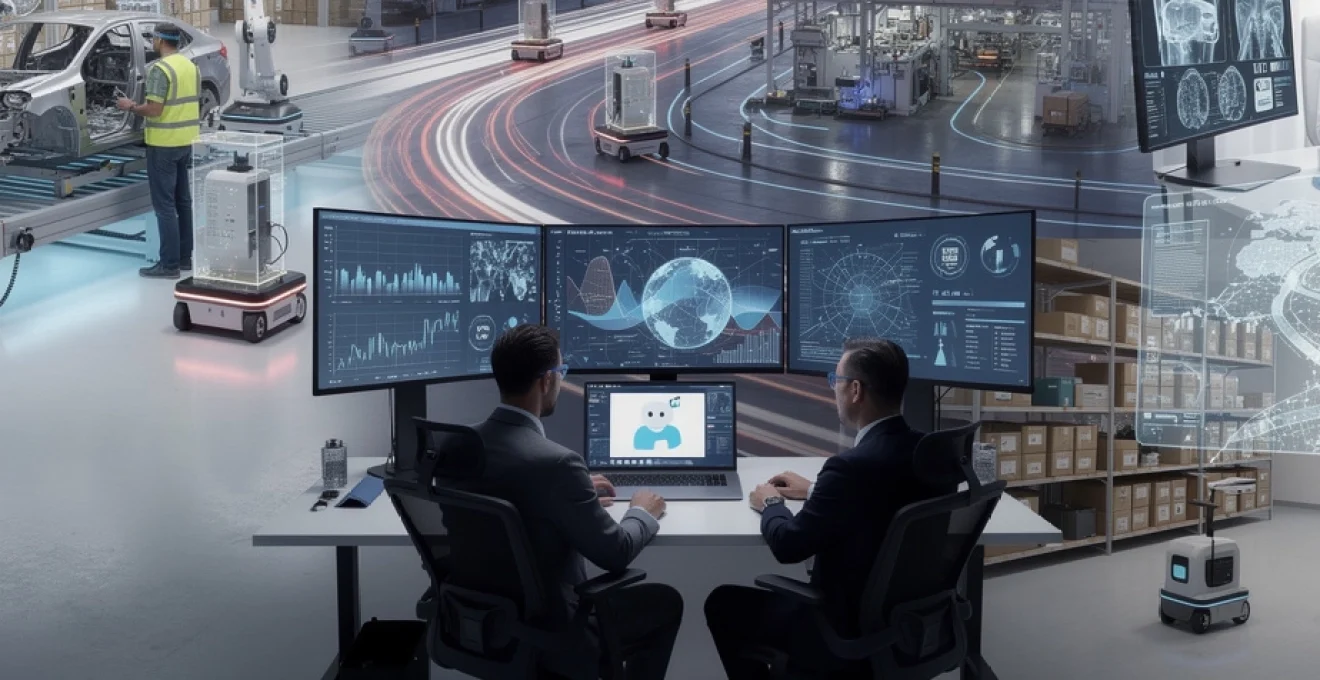
The digital transformation sweeping across global industries represents far more than a technological trend—it signifies a fundamental restructuring of how businesses operate, compete, and deliver value. Automated systems powered by artificial intelligence, machine learning, and sophisticated robotics are no longer confined to science fiction narratives or experimental laboratories. These technologies have become operational cornerstones in manufacturing plants, financial institutions, healthcare facilities, and logistics networks worldwide. As organisations grapple with mounting pressure to enhance efficiency, reduce operational costs, and maintain competitive advantages, automation emerges not merely as an option but as an imperative for survival in increasingly demanding markets.
The acceleration of automation adoption has intensified dramatically since 2020, driven by supply chain disruptions, labour shortages, and the urgent need for business continuity during unprecedented global challenges. According to the International Federation of Robotics, the global operational stock of industrial robots reached approximately 3.5 million units, representing a compound annual growth rate exceeding 13% over recent years. This remarkable expansion reflects a broader recognition that intelligent automation delivers tangible returns on investment whilst simultaneously addressing workforce dynamics and operational resilience requirements that traditional approaches cannot adequately resolve.
Robotic process automation transforming manufacturing supply chains
Manufacturing environments have witnessed perhaps the most profound transformation through robotic process automation, fundamentally altering production methodologies that remained relatively unchanged for decades. Modern manufacturing facilities increasingly resemble orchestrated technological ecosystems where interconnected systems communicate seamlessly, optimising workflows with minimal human intervention. This evolution extends beyond simple task replacement—it encompasses comprehensive reimagining of production architectures, quality assurance protocols, and supply chain coordination mechanisms that collectively enhance operational performance by margins previously considered unattainable.
The integration of advanced robotic systems within manufacturing supply chains addresses multiple operational challenges simultaneously. Production consistency improves dramatically as automated systems eliminate variability inherent in manual processes, whilst simultaneously generating comprehensive data streams that enable continuous improvement initiatives. Manufacturing leaders report productivity improvements ranging from 20% to 40% following successful automation implementations, with defect rates decreasing by comparable proportions. These quantifiable benefits translate directly into competitive advantages, enabling manufacturers to respond more rapidly to market demands whilst maintaining stringent quality standards that increasingly discerning consumers expect.
Collaborative robots (cobots) in automotive assembly lines at tesla and BMW
Collaborative robots, commonly termed cobots, represent a paradigm shift in human-machine interaction within manufacturing environments. Unlike traditional industrial robots confined to safety cages and isolated workspaces, cobots work alongside human operators, combining mechanical precision with human adaptability and problem-solving capabilities. Tesla’s Fremont facility exemplifies this approach, deploying hundreds of cobots that perform welding, painting, and assembly operations whilst human technicians focus on complex tasks requiring judgement and fine motor skills that automation cannot yet replicate effectively.
BMW’s production facilities have similarly embraced collaborative robotics, implementing systems that adjust operational parameters based on real-time feedback from human colleagues. These intelligent systems recognise when operators require assistance, automatically modifying speed, force, and positioning to accommodate collaborative workflows. The German automotive manufacturer reports that cobot integration has reduced assembly time by approximately 85% for specific components whilst simultaneously improving ergonomic conditions for workers who previously performed repetitive, physically demanding tasks. This symbiotic relationship between human expertise and robotic consistency demonstrates that effective automation amplifies rather than replaces human capabilities when implemented thoughtfully.
Automated inventory management systems using RFID and IoT sensors
Inventory management has transformed from a labour-intensive administrative burden into a sophisticated, data-driven discipline through automation technologies. Radio-frequency identification (RFID) tags and Internet of Things (IoT) sensors provide real-time visibility into inventory movements, locations, and conditions throughout complex supply chains. These systems automatically track components from supplier facilities through production processes to final delivery, generating comprehensive audit trails that enhance accountability whilst reducing manual documentation requirements by approximately 60-70% according to industry benchmarks.
Modern automated inventory systems leverage machine learning algorithms to predict demand patterns, optimise reorder points, and identify potential supply disruptions before they impact production schedules. You can see this technology in action across industries—from aerospace manufacturers tracking thousands of precision components to pharmaceutical companies maintaining strict temperature controls for sensitive materials. The financial impact proves substantial: organisations implementing automated inventory
systems often report inventory carrying cost reductions of 10–25%, alongside marked decreases in stockouts and production stoppages. For manufacturers, this level of real-time transparency turns inventory from a reactive function into a strategic lever, enabling leaner operations and more resilient manufacturing supply chains.
Predictive maintenance algorithms reducing downtime in industrial equipment
Predictive maintenance represents one of the most compelling applications of automated systems in modern industries. By combining IoT sensors, historical performance data, and machine learning algorithms, organisations can anticipate equipment failures before they occur. Rather than relying on rigid, calendar-based maintenance schedules, manufacturers shift to condition-based interventions triggered by real-time insights into vibration signatures, temperature anomalies, or pressure deviations.
This data-driven approach yields tangible operational benefits. Studies from McKinsey and Deloitte indicate that predictive maintenance can reduce unplanned downtime by up to 50% and extend asset lifetimes by 20–40%. In practice, this means fewer unexpected line stoppages, lower emergency repair costs, and more predictable production capacity. For plant managers, having a dashboard that flags a critical compressor likely to fail within the next 72 hours is akin to having a weather forecast for their factory floor—it enables proactive planning instead of costly, last-minute firefighting.
Implementing predictive maintenance, however, is not without its challenges. Organisations must ensure data quality, integrate sensor data with existing SCADA or MES platforms, and build robust analytics models that can distinguish meaningful patterns from noise. Additionally, maintenance teams require upskilling to interpret algorithmic recommendations and translate them into effective work orders. When executed well, though, predictive maintenance becomes a cornerstone capability of Industry 4.0, tightly linking operational reliability with broader digital transformation strategies.
Digital twin technology for real-time production optimisation
Digital twin technology takes automation in manufacturing a step further by creating virtual replicas of physical assets, production lines, or even entire factories. These dynamic models mirror real-world operations in real time, continuously updated through streams of sensor data. Engineers can use digital twins to simulate process changes, test alternative configurations, or assess “what-if” scenarios without risking disruption to actual production.
Consider a high-volume electronics manufacturer facing fluctuating demand and frequent product refresh cycles. A digital twin of its assembly line enables the operations team to trial new layouts, adjust cycle times, and fine-tune robot paths in a virtual environment before committing to physical changes. The result? Reduced changeover times, fewer bottlenecks, and faster time-to-market for new product variants. According to Gartner, organisations that invest in digital twin initiatives typically see efficiency improvements of up to 10% by optimising throughput, energy consumption, and quality parameters.
From a strategic standpoint, digital twins function like a living blueprint for continuous improvement. As you integrate them with predictive maintenance systems and advanced analytics, they form the backbone of a smart factory where decision-making becomes increasingly data-driven and automated. Yet success depends on strong data governance, careful model calibration, and cross-functional collaboration between IT, OT, and engineering teams. When these elements align, digital twins transform production optimisation from periodic, manual projects into an ongoing, automated capability.
Machine learning applications revolutionising financial services operations
While manufacturing often dominates discussions about automation, financial services are experiencing a parallel revolution driven by machine learning and AI-driven automated systems. Banks, insurers, and asset managers increasingly rely on algorithms to analyse risk, detect anomalies, and personalise customer interactions at scale. In an industry where milliseconds can influence profitability and trust is paramount, the strategic deployment of intelligent automation has become a key differentiator.
Machine learning models excel at identifying subtle patterns within massive, complex datasets—patterns that would be nearly impossible for humans to detect consistently. From real-time credit scoring to automated compliance monitoring, these systems are reshaping workflows that were once document-heavy and labour-intensive. As a result, financial institutions can process transactions faster, manage risk more accurately, and offer more tailored products, all while controlling operational costs and meeting stringent regulatory expectations.
Algorithmic trading platforms and high-frequency trading systems
Algorithmic trading platforms embody the convergence of automation, data, and advanced analytics in capital markets. These systems execute trades based on predefined strategies that factor in price movements, market depth, volatility, and even alternative data such as news sentiment. High-frequency trading (HFT) systems push this further, placing and cancelling thousands of orders per second in response to micro-changes in market conditions.
In this context, the speed and accuracy of automated systems become critical competitive advantages. Machine learning models continually refine trading strategies by learning from historical and real-time data, adjusting parameters to optimise execution quality and reduce slippage. For institutional investors, algorithmic trading can enhance liquidity provision and lower transaction costs, contributing to more efficient markets overall. Yet it also introduces systemic risks, such as flash crashes triggered by feedback loops among competing algorithms.
To mitigate these risks, regulators and exchanges implement circuit breakers, surveillance tools, and stress tests tailored to algorithmic activity. Financial firms must also invest in robust governance frameworks, documenting model assumptions, monitoring performance drift, and implementing human oversight for high-impact decisions. For organisations considering algorithmic trading, the key question is not just “How fast can we trade?” but “How do we automate responsibly while preserving market stability and client trust?”
Fraud detection using neural networks and pattern recognition
Fraud detection in banking and payments has been transformed by neural networks and advanced pattern recognition techniques. Traditional rule-based systems—flagging transactions above a certain threshold or originating from specific geographies—struggle to keep pace with increasingly sophisticated fraud schemes. Machine learning-based systems, by contrast, analyse multiple dimensions of behaviour simultaneously, from spending patterns and device fingerprints to geolocation data and transaction timing.
Deep learning models excel at recognising anomalies in this multi-dimensional space, identifying suspicious activity in near real time. Card issuers and payment processors report fraud loss reductions of 30–50% after deploying AI-driven detection platforms, often with fewer false positives than legacy rule engines. For customers, this translates into fewer blocked legitimate transactions and faster resolution when issues do arise.
However, fraud detection is a constant arms race. As models become more effective, fraudsters adapt their tactics, forcing institutions to retrain and recalibrate their algorithms regularly. Data privacy and regulatory compliance, especially under frameworks like GDPR and PSD2, add further complexity. To succeed, you need a balanced strategy that combines cutting-edge machine learning with clear escalation paths, human investigators, and transparent communication with customers when automated systems intervene.
Chatbots and virtual assistants in customer service automation
Customer service automation in financial services has advanced rapidly with the rise of chatbots and virtual assistants. Powered by natural language understanding and machine learning, these systems handle routine inquiries such as balance checks, transaction histories, and card limit adjustments across channels like mobile apps, web portals, and messaging platforms. For banks managing millions of interactions per month, even partial automation yields substantial savings and improved response times.
Leading institutions now deploy virtual assistants that can authenticate users, guide them through complex processes such as loan applications, and even provide personalised financial advice within predefined boundaries. This always-on availability aligns with evolving customer expectations for instant, 24/7 service. Research from Juniper Networks suggests that by mid-decade, chatbots could deliver billions of dollars in annual cost reductions for banks globally while maintaining or improving customer satisfaction scores.
Nonetheless, the goal is not to eliminate human agents but to reserve their expertise for high-value or sensitive interactions. Well-designed systems escalate seamlessly when user intent is unclear or emotional cues indicate frustration. When you implement chatbots, focus on clear conversational design, transparent handoffs to human support, and continuous learning from real interactions. Done right, customer service automation becomes an extension of your brand experience rather than a barrier between you and your clients.
Credit risk assessment through advanced analytics and AI models
Credit risk assessment is another domain where automated systems and advanced analytics are reshaping traditional practices. Instead of relying solely on static credit scores and limited financial histories, AI-driven models can ingest a wider array of data, including transaction histories, income volatility, and even context-specific signals like industry trends or macroeconomic indicators. This richer perspective supports more nuanced, dynamic assessments of borrower risk.
For lenders, the benefits are compelling: faster loan approvals, reduced default rates, and the ability to extend credit to previously underserved segments with more confidence. Fintech platforms, for example, leverage alternative data to evaluate gig workers or small businesses lacking extensive credit histories, broadening financial inclusion. Automated risk engines can pre-approve or decline applications in seconds, providing the responsive, digital-first experience many customers now expect.
Yet, with greater automation comes heightened responsibility. Bias in training data can lead to discriminatory outcomes, even when models appear neutral on the surface. Regulators increasingly expect institutions to explain automated decisions, especially adverse ones. To address these concerns, you should incorporate explainable AI techniques, conduct rigorous fairness testing, and maintain human oversight for edge cases or high-impact decisions. Combining human judgement with machine precision offers the best path toward responsible, scalable credit risk automation.
Autonomous systems reshaping logistics and transportation networks
Logistics and transportation networks have emerged as proving grounds for autonomous systems, driven by rising e-commerce volumes, tight delivery windows, and ongoing labour constraints. From self-driving vehicles in warehouses to drone delivery trials, automation is fundamentally changing how goods move from producers to consumers. The objective is clear: move faster, more safely, and at lower cost while maintaining visibility across every stage of the supply chain.
As with other industries, the most successful implementations blend advanced technologies—robotics, computer vision, route optimisation algorithms—with human expertise on the ground. Rather than replacing logistics professionals, autonomous systems handle repetitive, time-sensitive tasks, allowing humans to focus on exception handling, network design, and customer relationships. For organisations prepared to rethink their operations, the payoff can be transformative, including shorter lead times, reduced fuel consumption, and improved on-time delivery performance.
Self-driving vehicles in warehouse management: amazon robotics and kiva systems
The transformation of warehouse operations by self-driving vehicles is exemplified by Amazon Robotics, which evolved from the acquisition of Kiva Systems. Instead of workers walking long aisles to pick items, fleets of autonomous mobile robots (AMRs) move shelving units to stationary pickers. These robots navigate using QR codes, LiDAR, and onboard sensors, coordinating their movements through centralised control systems that optimise traffic and minimise congestion.
This goods-to-person model significantly boosts throughput and reduces physical strain on workers. Amazon has reported productivity gains of up to 20–40% in facilities using its robotic systems, with order processing times shrinking from hours to minutes during peak demand. Similar AMR technologies are now deployed by third-party logistics providers and retailers seeking to replicate these benefits in their own fulfilment centres.
Implementing autonomous warehouse vehicles requires thoughtful planning. You must redesign floor layouts, establish clear safety protocols, and ensure robust connectivity to support real-time navigation and control. Change management is equally important; employees need training to work safely alongside robots and to transition into new roles overseeing automated systems. When integrated effectively, self-driving warehouse vehicles become core components of scalable, resilient logistics networks.
Drone delivery systems for last-mile distribution challenges
Last-mile delivery remains one of the most expensive and complex stages of the logistics chain, particularly in dense urban areas or remote regions. Drone delivery systems offer a compelling, though still emerging, solution. Equipped with GPS, computer vision, and collision-avoidance algorithms, delivery drones can transport small parcels directly to customers’ homes or designated pickup points, bypassing traffic congestion and challenging terrain.
Pilots by companies such as Wing, Zipline, and Amazon Prime Air demonstrate the potential of this automated approach. Zipline, for instance, has successfully used fixed-wing drones to deliver medical supplies and blood products to rural clinics, reducing delivery times from hours to minutes and improving healthcare access. For retailers and logistics providers, drones could enable on-demand delivery of high-priority items, from urgent spare parts to pharmaceuticals.
However, widespread adoption depends on overcoming regulatory, safety, and public acceptance hurdles. Airspace management, noise concerns, and privacy considerations all require careful attention. Organisations exploring drone delivery should begin with clearly defined use cases, such as medical logistics or campus-based operations, where the value proposition is strongest and risk can be tightly controlled. Over time, as regulations mature and technologies improve, drone delivery could become a standard component of integrated, automated last-mile networks.
Route optimisation software using real-time traffic data analytics
Even without fully autonomous vehicles, route optimisation software represents a powerful form of automation in transportation. By combining real-time traffic data, weather information, delivery constraints, and vehicle characteristics, advanced algorithms continuously compute the most efficient routes for fleets. This dynamic optimisation reduces fuel consumption, shortens delivery times, and improves asset utilisation across complex distribution networks.
Modern systems leverage machine learning to refine their predictions over time, learning from historical patterns such as recurring congestion hotspots or seasonal demand spikes. For example, a logistics provider might use route optimisation to predict that certain urban corridors slow significantly on Friday afternoons and automatically reroute vehicles or adjust delivery windows. Studies suggest that companies using sophisticated route optimisation tools can reduce logistics costs by 10–15% while meeting or exceeding customer service-level agreements.
From an implementation perspective, integrating route optimisation with existing transportation management systems (TMS) and telematics platforms is crucial. Drivers must also trust and understand the recommendations provided by automated systems, highlighting the need for clear interfaces and feedback mechanisms. When aligned with broader logistics strategies, route optimisation software becomes an invisible but powerful engine, quietly orchestrating the movement of goods across increasingly complex transportation networks.
Computer vision and image recognition in healthcare diagnostics
Healthcare diagnostics have entered a new era with the advent of computer vision and image recognition technologies. Powered by deep learning, these systems analyse medical images—such as X-rays, CT scans, MRIs, and dermatological photos—to detect anomalies that may indicate disease. In many cases, AI models match or surpass human specialists in specific diagnostic tasks, especially when reviewing large volumes of similar images.
For instance, AI-driven tools have demonstrated high accuracy in identifying early-stage lung nodules, diabetic retinopathy, and certain skin cancers. By acting as a second set of “digital eyes” for radiologists and clinicians, these automated systems help reduce oversight risk and standardise interpretations across institutions. A study published in The Lancet Digital Health reported that some deep learning models achieved sensitivity and specificity metrics comparable to panels of expert radiologists in breast cancer screening.
Yet, computer vision in healthcare is not about replacing clinicians. Instead, it aims to augment their capabilities, streamline workflows, and free up time for patient interaction and complex decision-making. Automated pre-screening of images can prioritise urgent cases, allowing radiologists to focus on the most critical studies first. Integration with hospital information systems ensures that AI-generated findings are contextualised with patient history and laboratory results, supporting a holistic view of each case.
Ethical and regulatory considerations remain central to deploying these technologies. Developers must ensure that training datasets represent diverse populations to avoid biased performance across demographic groups. Healthcare providers, in turn, need clear validation studies, transparent performance metrics, and robust processes for monitoring AI tools in real-world use. When these safeguards are in place, computer vision becomes a powerful ally in improving diagnostic accuracy and expanding access to high-quality healthcare, particularly in regions with limited specialist availability.
Natural language processing automating legal document review and contract analysis
The legal sector, long associated with extensive manual document review, is being reshaped by natural language processing (NLP) and AI-powered contract analysis tools. These automated systems can scan thousands of pages in minutes, extracting key clauses, flagging non-standard language, and identifying potential risks. For law firms and in-house legal teams, this automation dramatically accelerates due diligence, compliance checks, and contract lifecycle management.
At the core of these solutions are NLP models trained on legal corpora, enabling them to recognise complex structures, legal terminology, and subtle variations in phrasing. During mergers and acquisitions, for example, AI review platforms can rapidly classify contracts by type, highlight change-of-control clauses, and surface obligations that might impact deal value. What once required teams of junior associates working long hours can now be completed faster and with greater consistency.
Beyond transactional work, automated contract analysis supports ongoing risk management. Organisations can run their existing contract repositories through NLP tools to identify outdated terms, data protection gaps, or non-compliant clauses related to evolving regulations. For procurement and sales teams, template-based automation and clause libraries help standardise agreements while still allowing for controlled flexibility. In this way, legal automation becomes a strategic enabler rather than a narrow cost-saving measure.
Of course, human legal expertise remains indispensable. AI systems do not “understand” context, commercial strategy, or nuanced negotiation dynamics in the same way experienced lawyers do. The most effective implementations position NLP as a force multiplier: you use it to handle repetitive extraction and classification tasks, while lawyers focus on interpretation, strategy, and client advice. As with other automated systems, transparency, version control, and clear audit trails are essential to maintain trust with clients, regulators, and the courts.
Industrial IoT platforms enabling smart factory integration and industry 4.0
Industrial IoT (IIoT) platforms sit at the heart of smart factories and Industry 4.0 initiatives, connecting machines, sensors, and enterprise systems into unified digital ecosystems. By aggregating data from across production lines, warehouses, and supply chains, IIoT platforms enable real-time visibility and coordinated control. This connectivity turns previously isolated assets into components of an integrated, self-optimising industrial environment.
In a typical deployment, sensors monitor variables such as temperature, vibration, energy usage, and production output. Data flows through secure gateways to cloud or edge computing environments, where analytics engines and machine learning models transform raw signals into actionable insights. Plant managers can track overall equipment effectiveness (OEE) dashboards, receive alerts about anomalies, and trigger automated responses—such as adjusting process parameters or scheduling maintenance—without manual intervention.
The strategic value of IIoT platforms lies in their ability to break down silos between operational technology (OT) and information technology (IT). Integration with ERP, MES, and PLM systems enables end-to-end traceability, from raw materials through manufacturing to final delivery. For example, a quality issue detected on a specific batch can be traced back to the exact machine settings, supplier lots, and operator shifts involved, dramatically accelerating root-cause analysis and corrective actions.
However, building a mature Industry 4.0 environment requires more than simply deploying sensors and dashboards. You must address cybersecurity risks associated with increased connectivity, define clear data ownership and governance policies, and cultivate a workforce capable of interpreting and acting on digital insights. Many organisations find success by starting with focused, high-value IIoT use cases—such as energy optimisation, predictive maintenance, or real-time quality monitoring—and scaling from there.
As industrial automation continues to evolve, IIoT platforms will play an increasingly central role in orchestrating complex interactions between robots, humans, and digital systems. They provide the foundation upon which advanced capabilities like digital twins, autonomous production scheduling, and AI-driven quality control can flourish. For manufacturers and industrial enterprises seeking to remain competitive in a rapidly changing landscape, embracing IIoT-enabled smart factory integration is no longer a distant aspiration—it is quickly becoming a prerequisite for long-term success.