# Key Developments in Healthcare and Education Shaping the Future
The convergence of technology and human services has reached a tipping point that will define the next decade of healthcare delivery and educational pedagogy. From artificial intelligence algorithms that diagnose rare diseases with unprecedented accuracy to immersive virtual reality environments that prepare surgeons for complex procedures, innovation is fundamentally reshaping how we deliver care and cultivate knowledge. These transformations extend far beyond incremental improvements—they represent paradigmatic shifts in how professionals are trained, how patients receive treatment, and how institutions measure success. The integration of blockchain technology, adaptive learning platforms, and genomic sequencing capabilities is creating ecosystems where personalised care and individualised education are becoming the standard rather than the exception.
As healthcare systems worldwide grapple with aging populations, resource constraints, and chronic disease management challenges, technology offers solutions that were unimaginable just a decade ago. Similarly, educational institutions face mounting pressure to produce graduates equipped not merely with theoretical knowledge but with practical competencies and adaptable skill sets. The innovations examined here aren’t isolated developments—they form an interconnected web of advancement where progress in one domain accelerates transformation in another. Understanding these developments isn’t simply about staying current; it’s about preparing for a future that’s arriving faster than many anticipated.
Artificial intelligence integration in clinical diagnostics and patient care systems
Artificial intelligence has transitioned from experimental curiosity to clinical necessity in remarkably short order. Today’s AI-powered diagnostic systems analyse medical imaging with accuracy rates that match or exceed experienced radiologists, whilst simultaneously processing thousands of images in the time a human specialist would require for a single case. This computational power isn’t replacing clinical judgement—it’s augmenting it, providing clinicians with sophisticated decision support that reduces diagnostic errors and accelerates treatment initiation. The implications extend well beyond efficiency gains; they fundamentally alter the economics of healthcare delivery by enabling earlier intervention when treatments are most effective and least expensive.
IBM watson health and google DeepMind’s diagnostic imaging applications
The development of sophisticated neural networks trained on millions of annotated medical images has produced diagnostic tools capable of identifying subtle patterns invisible to the human eye. Deep learning algorithms now detect early-stage cancers, predict cardiovascular events, and identify neurological abnormalities with remarkable precision. IBM Watson Health’s oncology applications analyse patient records against vast databases of clinical trials, treatment protocols, and research literature to recommend evidence-based treatment options tailored to individual patient profiles. Meanwhile, Google DeepMind’s collaboration with ophthalmology departments has yielded AI systems that screen for diabetic retinopathy and age-related macular degeneration, potentially preventing blindness in millions of patients worldwide who lack access to specialist care.
These applications demonstrate AI’s capacity to democratise expert-level diagnostics, extending specialist capabilities to remote and underserved populations. A community health centre in rural Wales can now offer diagnostic imaging analysis comparable to London’s leading hospitals. However, implementation challenges remain substantial—regulatory approval processes, liability frameworks, and integration with existing clinical workflows require careful navigation. The technology’s promise is undeniable, yet realising that promise demands thoughtful deployment strategies that prioritise patient safety whilst embracing innovation.
Natural language processing for electronic health records analysis
Electronic health records contain vast troves of clinical information, yet much of this data remains effectively inaccessible due to its unstructured format. Natural language processing algorithms are transforming this landscape by extracting meaningful insights from clinical notes, discharge summaries, and consultation reports. These systems identify medication interactions, flag potential adverse events, and highlight gaps in preventive care—all without requiring clinicians to navigate multiple database queries or manual chart reviews. Automated documentation systems now transcribe patient encounters in real-time, allowing physicians to maintain eye contact with patients rather than typing into computers.
The efficiency gains are substantial, but the clinical safety improvements are even more significant. NLP systems detect subtle patterns across patient populations that might escape individual clinicians’ attention, identifying emerging drug resistance patterns or unusual symptom clusters that warrant investigation. Recent implementations in NHS trusts have demonstrated 23% reductions in documentation time and 31% improvements in coding accuracy, translating to millions of pounds in recovered revenue and countless hours returned to patient care. What was once administrative burden is becoming clinical intelligence.
Predictive analytics in emergency department triage protocols
Emergency departments operate in perpetual tension between throughput demands and clinical accuracy. Predictive analytics systems are helping to resolve this tension by
processing real-time streams of data on patient arrivals, vital signs, laboratory results, and historical outcomes. These models generate dynamic risk scores that support triage nurses and physicians as they prioritise care, helping to identify which patients are most likely to deteriorate and which can safely wait. Rather than replacing the traditional Manchester Triage System or similar frameworks, predictive analytics functions as an additional layer of intelligence, highlighting outliers and edge cases where human judgement might be challenged by volume and time pressure. Early adopters have reported reductions in time-to-treatment for high-risk patients and measurable decreases in unplanned intensive care admissions. For overstretched emergency departments, even marginal improvements in triage accuracy can translate into lives saved and significant reductions in overcrowding.
However, integrating predictive analytics into emergency department workflows raises important questions. How do we prevent algorithmic bias from amplifying existing health inequalities, particularly in populations underrepresented in historical data sets? Healthcare organisations must implement robust validation processes, ensure transparent model governance, and maintain clear clinical oversight. Training programmes for frontline staff are equally crucial so that clinicians understand not only how to interpret risk scores but also when to override them. In the most successful implementations, predictive analytics is treated as a consultation tool—an ever-present colleague offering a second opinion, not an infallible oracle dictating care.
Machine learning algorithms for personalised treatment pathways
Beyond acute care, machine learning is enabling truly personalised treatment pathways that adapt to individual patient characteristics. By analysing vast repositories of clinical outcomes, genomic profiles, lifestyle data, and even information from wearable devices, modern algorithms can identify which therapies are most likely to succeed for a particular patient. This approach moves us away from the traditional “one-size-fits-most” paradigm toward precision care where two patients with the same diagnosis might receive distinctly different treatment plans optimised for their biology and context. In oncology, for instance, decision-support systems now recommend chemotherapy regimens based on tumour genomics, predicted toxicity, and real-world survival data from comparable cases.
The benefits of personalised treatment extend beyond clinical outcomes. When patients understand that their care plan is tailored rather than generic, adherence and satisfaction often improve. Yet building and maintaining these machine learning models is far from trivial. Data quality, interoperability between electronic systems, and patient consent for secondary data use all influence the reliability of algorithmic recommendations. Healthcare leaders must therefore establish multidisciplinary governance structures that bring together clinicians, data scientists, ethicists, and patient representatives. When done well, machine learning becomes not just a technical upgrade but a catalyst for more collaborative, patient-centred care.
Telemedicine infrastructure and remote healthcare delivery mechanisms
Telemedicine has transitioned from a niche service to a core component of modern healthcare infrastructure. During the COVID-19 pandemic, virtual consultations skyrocketed, and many patients have since come to expect remote access as a standard option. Yet sustainable remote healthcare delivery requires more than video calls—it demands robust platforms, secure data transmission, integrated clinical workflows, and supportive regulatory frameworks. As we refine telehealth models, the goal is clear: to provide care that is as safe, effective, and personal as in-person consultations, while expanding access to underserved populations and reducing unnecessary travel and wait times.
NHS digital’s video consultation platform architecture
NHS Digital’s video consultation platforms illustrate how large-scale telemedicine systems can be architected for resilience and security. Built on cloud-native microservices, these platforms separate core functions—such as user authentication, video streaming, appointment scheduling, and clinical documentation—into modular components that can be updated independently. This architecture supports rapid scaling during surges in demand, such as winter pressures or regional outbreaks, without degrading service quality. End-to-end encryption ensures patient confidentiality, while integration with existing NHS systems allows clinicians to launch video visits directly from the electronic health record interface.
From a user perspective, the most successful telemedicine platforms are those that feel almost invisible. Patients receive a secure link by text or email, click to join from any device, and find themselves in a virtual waiting room that mirrors the in-person experience. For clinicians, tight integration with scheduling and documentation tools reduces friction and minimises duplication of work. Going forward, we can expect these platforms to incorporate more advanced features, including AI-driven language translation, automated note generation, and decision-support prompts triggered by information shared during the consultation. The underlying architecture must therefore remain flexible enough to support continuous innovation whilst complying with stringent information governance requirements.
Remote patient monitoring devices and IoT biosensor integration
Remote patient monitoring is rapidly evolving from occasional home measurements to continuous, sensor-driven insight. Connected blood pressure cuffs, glucometers, pulse oximeters, and wearable ECG patches stream real-time data to cloud platforms, where algorithms can detect deterioration long before symptoms become obvious. For people with chronic conditions such as heart failure or COPD, this shift from episodic to continuous monitoring can dramatically reduce hospital admissions and emergency department visits. Clinicians receive alerts when predefined thresholds are breached, enabling proactive outreach instead of reactive crisis management.
Integrating Internet of Things (IoT) biosensors into routine care raises both technical and human factors challenges. Data must be transmitted securely, stored in interoperable formats, and filtered to avoid overwhelming clinicians with noise. At the same time, patients must be supported to use devices correctly and to trust that remote monitoring will not replace personal contact. Many successful programmes pair technology with dedicated care coordinators who interpret incoming data, contact patients when patterns change, and provide education on self-management. When you think of remote patient monitoring, it can be helpful to imagine a “digital safety net”—one that quietly surrounds high-risk patients, ready to tighten its weave the moment subtle changes indicate rising risk.
Regulatory compliance frameworks for cross-border telehealth services
As telemedicine erases geographical boundaries, regulatory complexity increases. Cross-border telehealth services must navigate differing licensure requirements, prescribing rules, data protection laws, and reimbursement policies. The European Union’s General Data Protection Regulation (GDPR) and the UK’s Data Protection Act, for example, impose strict controls on how personal health information can be collected, processed, and transferred. Providers offering care across jurisdictions must ensure that their platforms are compliant not only with technical security standards but also with consent, data minimisation, and patient rights provisions.
To operate safely at scale, organisations need clear governance frameworks and legal guidance that address questions such as: Where is the clinician considered to be practising? Which country’s malpractice laws apply? How is emergency follow-up managed if the patient is abroad? International telehealth initiatives increasingly rely on standardised data protection agreements, cross-licensure compacts, and transparent patient information explaining the limits of remote care. While these frameworks are still evolving, early adopters show that careful design and documentation can reconcile innovation with regulatory compliance. For healthcare leaders, investing in robust legal and compliance expertise is as important as selecting the right telemedicine platform.
5G network implementation in rural healthcare access
For all its promise, telemedicine is only as strong as the networks that support it. In many rural and remote regions, limited bandwidth has historically constrained video quality and prevented the use of advanced digital tools. The rollout of 5G networks is poised to change this equation by delivering high-speed, low-latency connectivity that can support real-time imaging, multi-party consultations, and even remote-controlled medical devices. Imagine a rural clinic where a general practitioner can stream high-resolution ultrasound images to a specialist hundreds of miles away, receiving guidance in real time—this is the kind of scenario 5G makes feasible.
Yet the implementation of 5G in rural healthcare is not simply a technical upgrade; it is a strategic equity intervention. Policymakers, telecom providers, and health systems must collaborate to ensure that investment does not concentrate solely in urban centres where returns are highest. Pilot projects that pair 5G deployment with community health initiatives, mobile clinics, and local training programmes can demonstrate value and build public trust. As you consider future digital health strategies, it is worth asking: are we designing for the already-connected, or are we using new networks to bring advanced care to those who have historically been left behind?
Precision medicine and genomic sequencing technologies
Precision medicine leverages detailed biological information—particularly genomic data—to tailor prevention, diagnosis, and treatment to individual patients. What was once the domain of research laboratories is increasingly entering everyday clinical practice, from oncology to cardiology and rare disease diagnostics. Advances in sequencing technology, data analytics, and biobanking have dramatically lowered costs and shortened turnaround times, making it feasible for healthcare systems to integrate genomic insights at scale. The result is a paradigm where we treat not just the disease, but the specific molecular mechanisms driving it in each patient.
Crispr-cas9 gene editing clinical trial developments
CRISPR-Cas9 gene editing has captured public imagination as a potential cure for previously intractable genetic disorders. Early clinical trials, including therapies for sickle cell disease and certain inherited blindness conditions, have demonstrated that precisely targeted genetic edits can yield dramatic clinical improvements. In late 2023, regulators in the UK approved the first CRISPR-based therapy for sickle cell disease and transfusion-dependent beta thalassemia, marking a historic milestone in precision medicine. These developments move gene editing from theoretical possibility to therapeutic reality.
However, clinical deployment of CRISPR technologies raises profound ethical and safety considerations. Off-target edits, long-term effects, and equitable access must all be carefully evaluated. The cost of advanced gene therapies remains extraordinarily high, raising concerns about who will benefit and how health systems will prioritise limited resources. Robust regulatory oversight, transparent public dialogue, and international collaboration are essential to navigate these challenges. As with many disruptive technologies, the question is not only “Can we do this?” but “How should we do this responsibly and fairly?”
Whole genome sequencing cost reduction and accessibility
The cost of whole genome sequencing has plummeted from millions of pounds per genome in the early 2000s to well under £1,000 today, with further declines expected. This cost reduction, combined with automation and streamlined workflows, has opened the door for population-scale genomics initiatives. Programmes such as the UK’s 100,000 Genomes Project have shown that sequencing can accelerate diagnosis for rare diseases, identify inherited cancer risks, and inform more targeted interventions. As turnaround times shrink from months to days, genomic information is becoming clinically actionable within typical care pathways.
Accessibility, however, is about more than price. Genomic literacy among clinicians and patients, availability of genetic counselling, and culturally sensitive consent processes all influence who benefits from sequencing. Health systems must invest in education and decision-support tools that help non-specialists interpret genomic reports clearly and accurately. Without these supports, we risk creating a new kind of digital divide—one where some populations are empowered by genomic information while others are left confused or excluded. The most effective precision medicine strategies therefore pair technology with human-centred support structures.
Pharmacogenomics integration in NHS prescription protocols
Pharmacogenomics—using genetic information to guide medication choice and dosing—is one of the most immediately practical applications of precision medicine. Variants in genes affecting drug metabolism can determine whether a patient experiences therapeutic benefit, no response, or severe side effects from a given medicine. The NHS has begun integrating pharmacogenomic testing into prescribing protocols for selected drugs, such as certain anticoagulants, antidepressants, and oncology treatments. Clinical decision-support tools embedded in electronic prescribing systems alert clinicians when genetic factors may influence drug selection or dose.
Implementing pharmacogenomics at scale requires careful change management. Clinicians must feel confident that test results are reliable and that guidance is evidence-based. Laboratories and information systems must ensure timely reporting and seamless integration of results into the electronic health record. Patients, meanwhile, need clear explanations of what their genetic information means—and importantly, what it does not mean—for their treatment. Over time, as more medications include pharmacogenomic guidance in their labels, we can expect a shift from reactive testing to pre-emptive panels conducted early in a patient’s journey, forming a genomic “baseline” that supports safer prescribing throughout their lifetime.
Adaptive learning technologies and personalised education platforms
Just as precision medicine personalises treatment, adaptive learning technologies personalise education. Traditional classrooms often deliver the same content at the same pace to all learners, regardless of prior knowledge, learning style, or aspirations. Adaptive platforms use data and artificial intelligence to tailor content difficulty, pacing, and feedback in real time, creating individualised learning pathways. This shift is particularly powerful in healthcare and STEM education, where mastering complex sequences of skills is essential for safe and effective practice.
Carnegie learning’s MATHia AI-driven tutoring systems
Carnegie Learning’s MATHia platform exemplifies how AI-driven tutoring systems can transform learning outcomes. Built on decades of cognitive science research, MATHia analyses each student’s problem-solving steps, misconceptions, and response times to infer their understanding of underlying concepts. Rather than simply marking answers as right or wrong, the system provides targeted hints, adjusts problem difficulty, and revisits prerequisite skills when needed. In effect, MATHia acts as a patient, always-available tutor that adapts minute by minute to the learner’s needs.
Independent evaluations have shown that students using MATHia can achieve the equivalent of several extra months of learning compared with traditional instruction alone. For educators, the platform offers dashboards highlighting which concepts students are struggling with and where intervention is most needed. This combination of automated support and human insight enables a more strategic use of classroom time, allowing teachers to focus on higher-order discussions and targeted small-group work. When we apply similar principles to medical and health professions education, we create environments where learners can practise clinical reasoning as intensively and safely as mathematics students practise problem solving.
Learning management systems with predictive student performance analytics
Modern learning management systems (LMS) are evolving into sophisticated analytics platforms that can predict student performance and flag learners at risk of falling behind. By tracking engagement metrics, assessment scores, discussion participation, and even patterns of login activity, predictive models identify early warning signs that might otherwise go unnoticed until final exams or clinical placements. Educators receive alerts prompting timely outreach, additional support, or adjustments to course design. In large cohorts where personal contact can be challenging, such analytics can be the difference between quiet disengagement and successful re-engagement.
Of course, predictive analytics in education must be used judiciously. Students should not be reduced to risk scores or labelled in ways that become self-fulfilling. Transparency about what data is collected, how it is used, and how predictions are interpreted is essential for maintaining trust. When designed responsibly, these systems act like a radar for educational challenges, helping institutions intervene earlier and more effectively. You can think of them as the educational equivalent of remote patient monitoring—quietly tracking key indicators and prompting action when thresholds are crossed.
Competency-based education models and micro-credentialing
Competency-based education shifts the focus from time spent in class to demonstrable mastery of specific skills and knowledge. Instead of progressing based solely on semesters or credit hours, learners advance when they can show that they have acquired defined competencies. This model aligns particularly well with professional and technical fields, including healthcare, where competence has direct implications for safety and quality. Micro-credentials—short, focused certifications that validate mastery of discrete skills—are emerging as a powerful tool within this framework.
Micro-credentials allow professionals to upskill or reskill in targeted areas without committing to full degrees, supporting lifelong learning in fast-changing domains like digital health or data analytics. For employers, verified micro-credentials offer clearer signals of capability than generic course titles or years of experience. The challenge lies in ensuring that competency frameworks are rigorous, transparent, and aligned across institutions so that micro-credentials carry consistent meaning. As more universities, professional bodies, and employers adopt shared standards, we can expect a more modular, flexible ecosystem where individuals curate personalised learning journeys over the course of their careers.
Neuroeducation research applications in curriculum design
Neuroeducation—the intersection of neuroscience, psychology, and pedagogy—is offering new insights into how people learn best. Research on attention, memory consolidation, cognitive load, and emotion is informing curriculum design in both schools and professional training programmes. For example, we now understand that spaced repetition, interleaving of topics, and retrieval practice significantly enhance long-term retention compared with massed study or passive review. Similarly, emotionally engaging content and real-world relevance can strengthen neural connections, making learning more durable and transferable.
Applying neuroeducation principles to curriculum design means structuring courses around how the brain naturally processes information rather than around institutional convenience. In medical education, this might involve shorter, more focused lectures interspersed with active problem-solving, simulation, and reflective practice. It might also mean designing assessments that emphasise application over recall, encouraging learners to explain reasoning rather than simply select correct answers. When educators embrace neuroeducation, they move closer to a pedagogy that is evidence-based in the same way that modern healthcare is evidence-based.
Immersive technologies in educational pedagogy
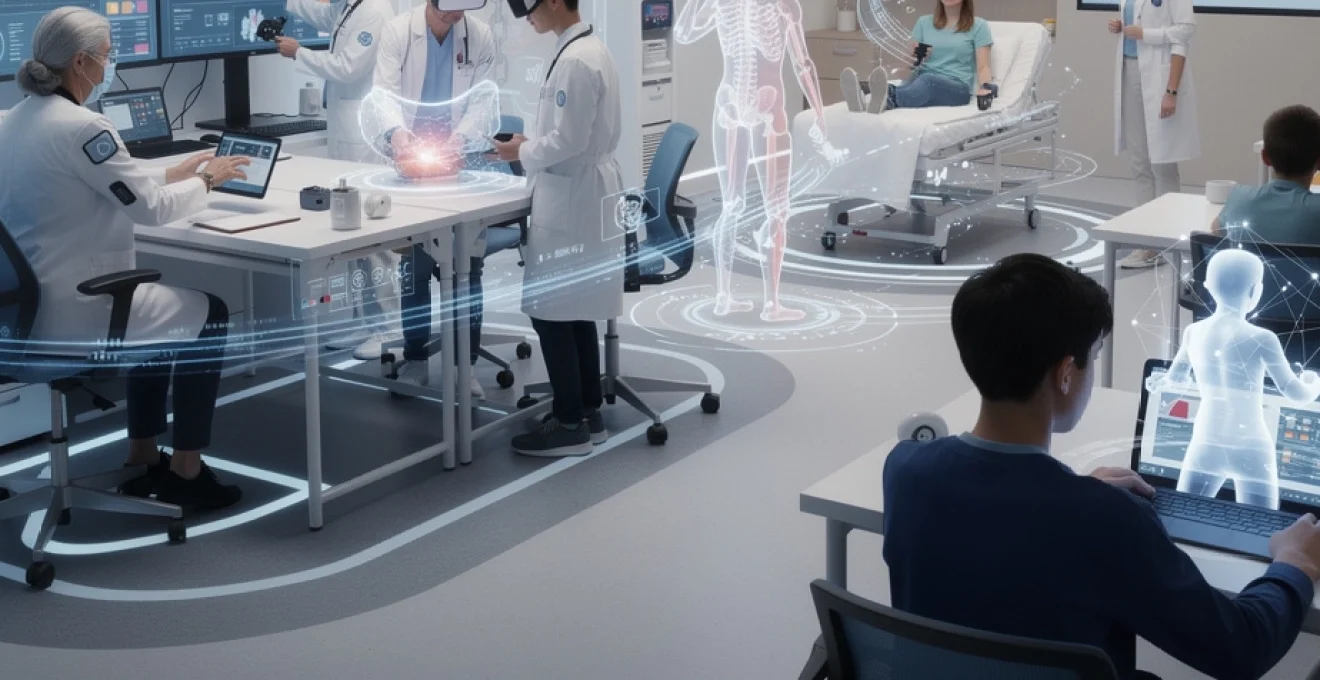
Immersive technologies such as virtual reality (VR), augmented reality (AR), and haptic interfaces are redefining experiential learning. Instead of merely reading about complex phenomena or watching demonstrations, learners can step inside simulated environments, manipulate virtual objects, and receive real-time feedback on their actions. This capability is especially valuable in high-stakes disciplines where hands-on practice is essential but opportunities are limited, such as surgery, engineering, and hazardous materials management. The result is a safer, more scalable way to develop procedural fluency and situational awareness.
Virtual reality laboratories for STEM education
Virtual reality laboratories enable students to conduct experiments that would be too costly, dangerous, or logistically complex in the physical world. In a VR chemistry lab, for instance, learners can safely handle volatile compounds, observe molecular interactions at atomic scale, and repeat procedures multiple times without consuming physical resources. Physics students can visualise electromagnetic fields or gravitational effects in three dimensions, exploring scenarios that would be impossible to recreate on campus. These immersive experiences make abstract concepts tangible, supporting deeper conceptual understanding.
VR labs also have significant equity implications. Institutions with limited budgets or rural campuses can provide access to advanced equipment and environments through relatively affordable headsets and software licences. While virtual experiments do not replace the need for some physical lab work, they can greatly expand opportunities for practice and exploration. For many learners, stepping into a virtual lab is like moving from a two-dimensional diagram to a living, breathing world—an analogy that underscores how immersion can transform engagement and comprehension.
Augmented reality applications in medical and engineering training
Augmented reality overlays digital information onto the physical world, enhancing rather than replacing direct experience. In medical training, AR headsets can project anatomical structures onto a mannequin or even a live patient, helping trainees visualise underlying organs, blood vessels, or surgical planes. During procedures, contextual guidance can appear in the clinician’s field of view, reducing the need to look away at separate monitors. In engineering, AR can superimpose design schematics onto machinery, guiding assembly, maintenance, or inspection tasks step by step.
These applications blur the line between learning and doing. Trainees receive just-in-time information and feedback while remaining grounded in real-world contexts. However, effective AR deployment requires careful instructional design; simply adding digital overlays does not guarantee better learning. Educators must decide which information truly supports performance and how to avoid cognitive overload. When thoughtfully implemented, AR becomes a powerful cognitive scaffold—supporting novices as they climb toward expert-level performance.
Haptic feedback systems for skills-based learning environments
Haptic feedback systems introduce a sense of touch into digital learning, allowing users to feel resistance, texture, and movement in simulated environments. In surgical training, haptic-enabled simulators can replicate the sensation of cutting through tissue, inserting needles, or navigating delicate anatomical structures. Engineering students can experience the forces involved in operating heavy equipment or assembling components, all within a controlled, risk-free setting. By engaging tactile as well as visual and auditory senses, haptics create richer, more realistic practice opportunities.
From a pedagogical perspective, haptic systems are particularly valuable for developing fine motor skills and muscle memory. Repetition in a simulator can prepare learners for real-world tasks in much the same way that a flight simulator prepares pilots for actual flight. The key is aligning haptic fidelity with educational objectives; not every task requires high-end hardware, but for critical skills, realistic feedback can accelerate competence and confidence. As costs decrease and devices become more portable, we are likely to see haptics integrated into a wider range of vocational and clinical training programmes.
Blockchain implementation in academic credentialing and healthcare data security
Blockchain technology, best known for underpinning cryptocurrencies, is finding powerful applications in both education and healthcare. Its core attributes—immutable, distributed ledgers and cryptographic verification—make it well-suited for securing sensitive data and verifying identities and credentials. In sectors where trust, provenance, and tamper-resistance are paramount, blockchain can streamline complex processes and reduce reliance on intermediaries. The potential spans from lifelong academic records to interoperable patient health information.
Distributed ledger technology for academic transcript verification
Academic institutions are increasingly exploring blockchain-based systems for issuing and verifying transcripts, diplomas, and micro-credentials. Instead of relying on paper documents or centralised databases that can be lost, forged, or delayed, universities can publish cryptographic proofs of credentials to a distributed ledger. Graduates then hold digital wallets containing verifiable credentials they can share with employers, professional bodies, or other institutions. Verification becomes a matter of checking the ledger rather than sending emails, chasing signatures, or paying third-party services.
This approach can dramatically reduce administrative overhead and fraud while giving learners greater control over their academic records. It also supports more fluid, lifelong learning journeys, where individuals accumulate credentials from multiple providers across different countries and modalities. For blockchain-based credentialing to achieve wide adoption, however, stakeholders must agree on standards, governance models, and interoperability frameworks. As with many technologies highlighted here, the technical solution is only one piece of the puzzle; effective collaboration and policy design are equally important.
Hipaa-compliant blockchain solutions for patient data interoperability
In healthcare, blockchain offers a promising route to secure, interoperable patient data exchange. Current systems often fragment health records across hospitals, clinics, and laboratories, making it difficult for clinicians to access complete, up-to-date information. Blockchain-based architectures can provide a unified index of where patient data resides, paired with robust access controls and audit trails. Rather than storing raw medical data on-chain, which would be impractical and risky, these solutions typically record hashed pointers and permissions, ensuring that only authorised parties can retrieve underlying records from secure repositories.
To be viable, such systems must comply with stringent privacy regulations such as HIPAA in the United States and equivalent frameworks elsewhere. That means implementing fine-grained consent management, supporting revocation of access, and ensuring that patients retain meaningful control over how their data is used. Early pilots suggest that blockchain can enhance trust by making data access transparent and traceable, reducing the risk of unauthorised sharing or silent breaches. For organisations grappling with data silos and interoperability challenges, blockchain is emerging as a powerful, if still maturing, addition to the toolkit.
Smart contracts in continuing professional development tracking
Continuing professional development (CPD) is essential in fields such as medicine, nursing, and engineering, yet tracking compliance across multiple providers and jurisdictions can be cumbersome. Smart contracts—self-executing agreements encoded on a blockchain—offer a way to automate aspects of CPD verification and recognition. When a practitioner completes an accredited course, the provider can trigger a smart contract that issues a verifiable credential and updates relevant registries. Regulators and employers can then confirm CPD status in real time without manual audits or paper certificates.
For professionals, this creates a more seamless experience where learning activities, whether formal courses or recognised workplace projects, contribute automatically to a secure, portable CPD portfolio. For regulators, smart contracts reduce administrative burden and improve data integrity. As you consider the future of professional education, it is not hard to imagine a world where career-long learning is recorded in a tamper-proof ledger, instantly verifiable anywhere in the world. Such a system would not replace the human judgement involved in accreditation and quality assurance, but it could provide a trustworthy backbone that makes lifelong learning easier to document, recognise, and reward.