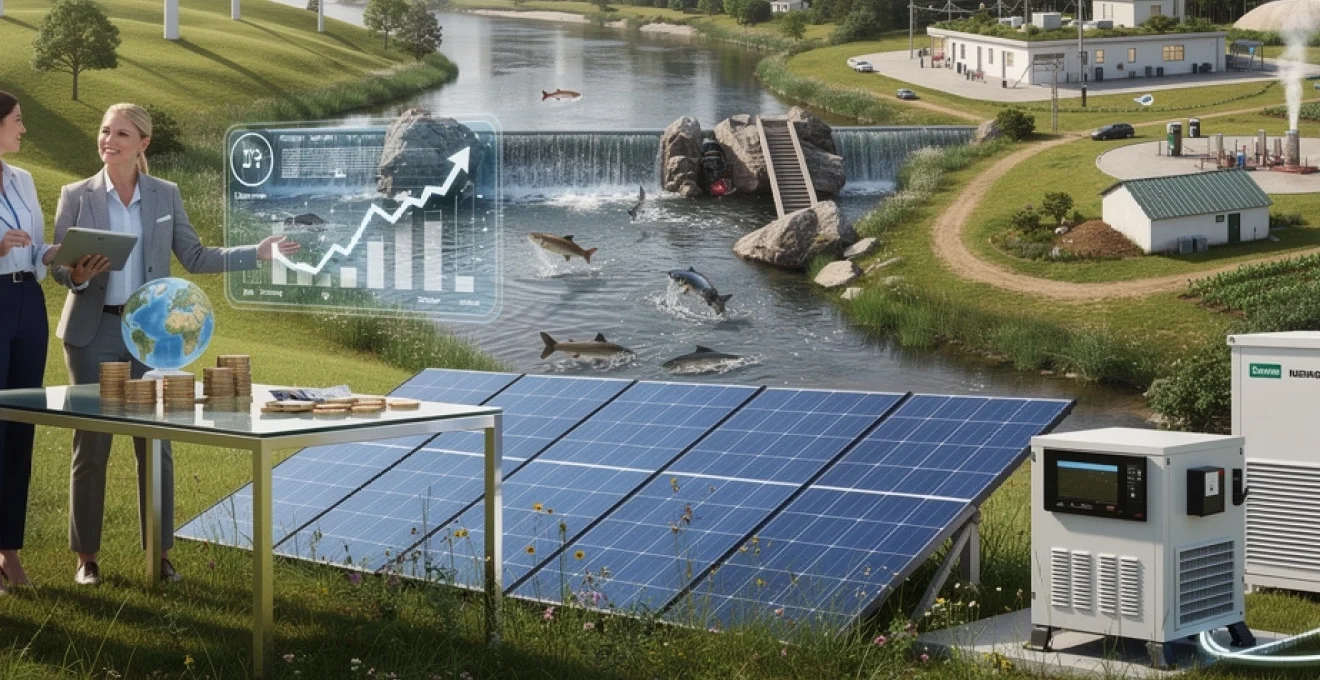
The transition towards renewable energy sources represents one of the most critical infrastructure transformations of our time, fundamentally reshaping how societies approach energy production, distribution, and consumption. Green energy systems have emerged as powerful catalysts for sustainable development, offering comprehensive solutions that address environmental challenges while fostering economic growth and social equity. As global energy demand continues to rise, with projections indicating an 18% increase by 2050, the integration of renewable technologies becomes increasingly vital for achieving climate targets and supporting universal energy access.
The relationship between green energy systems and sustainable development extends far beyond simple carbon emission reductions. These technologies create interconnected networks of environmental, economic, and social benefits that align directly with the United Nations Sustainable Development Goals. From remote rural communities gaining access to reliable electricity through community-scale systems to urban centres implementing smart grid technologies for optimised energy management, renewable energy infrastructure demonstrates remarkable versatility in addressing diverse developmental challenges while maintaining environmental integrity.
Renewable energy technologies and their environmental impact mechanisms
The environmental benefits of renewable energy systems extend across multiple ecological dimensions, creating positive feedback loops that enhance both immediate and long-term sustainability outcomes. Modern renewable technologies have achieved unprecedented efficiency levels while simultaneously reducing their environmental footprints through advanced materials and optimised design processes.
Photovoltaic solar panel efficiency in carbon footprint reduction
Contemporary photovoltaic systems demonstrate remarkable environmental performance metrics, with modern silicon-based panels achieving energy payback periods of just 1-2 years while maintaining operational lifespans exceeding 25 years. This efficiency translates to substantial carbon emission reductions, with each kilowatt of installed solar capacity preventing approximately 1.5 tonnes of CO2 emissions annually in typical European conditions.
The manufacturing processes for photovoltaic panels have undergone significant environmental improvements, incorporating recycling programmes that recover up to 95% of semiconductor materials from end-of-life panels. Advanced thin-film technologies, including perovskite and organic photovoltaic cells, promise even lower environmental impacts whilst maintaining competitive efficiency rates approaching 25% in laboratory conditions.
Wind turbine energy generation and ecosystem preservation
Modern wind turbine installations demonstrate sophisticated approaches to ecosystem integration, utilising advanced monitoring systems and optimised placement strategies that minimise impacts on wildlife corridors. Current generation turbines produce energy payback within 3-6 months of operation, whilst their 20-25 year operational lifespans generate substantial environmental benefits.
Offshore wind developments have pioneered innovative approaches to marine ecosystem enhancement, with turbine foundations serving as artificial reef structures that support biodiversity increases in surrounding waters. Recent studies indicate that well-designed offshore wind farms can increase local fish populations by up to 30%, demonstrating the potential for renewable energy infrastructure to actively enhance rather than merely preserve existing ecosystems.
Hydroelectric power systems and biodiversity conservation
Contemporary hydroelectric projects incorporate sophisticated environmental management systems, including fish ladders, sediment bypass systems, and habitat restoration programmes that maintain river ecosystem integrity. Run-of-river hydroelectric installations, in particular, demonstrate minimal environmental disruption whilst providing consistent baseload power generation.
Small-scale hydroelectric systems, typically generating between 1-10 MW, offer particularly attractive environmental profiles by utilising existing water infrastructure without requiring large reservoir construction. These systems maintain natural water flow patterns whilst providing localised energy generation that supports rural community development without significant ecological disruption.
Geothermal energy extraction and land use optimisation
Geothermal energy systems demonstrate exceptional land use efficiency, with typical installations requiring only 1-8 acres per MW of generating capacity compared to 3.5-10 acres for solar photovoltaic systems. Enhanced geothermal systems (EGS) technology extends the geographical potential for geothermal development, making this renewable resource accessible in regions previously considered unsuitable.
Modern geothermal installations incorporate closed-loop systems that eliminate groundwater contamination risks whilst maximising heat extraction efficiency. Binary cycle power plants achieve thermal efficiencies exceeding 15% whilst maintaining minimal atmospheric emissions and negligible water consumption requirements.
Biomass energy production and circular economy principles
Sustainable biomass energy systems exemplify circular economy principles by converting organic
Sustainable biomass energy systems exemplify circular economy principles by converting organic residues, agricultural by-products, and municipal green waste into useful heat and power instead of sending them to landfill. When feedstocks are sourced from sustainably managed forests, agricultural residues, or dedicated energy crops grown on marginal land, lifecycle greenhouse gas emissions can be reduced by up to 80% compared with fossil fuels. Modern combustion, gasification, and anaerobic digestion technologies also incorporate high-efficiency filters and emissions controls, significantly reducing particulate and NOx emissions relative to traditional biomass burning.
When designed carefully, biomass energy systems can create local value chains that support rural livelihoods and reduce waste management challenges. Digestate from biogas plants can be processed into high-quality fertiliser, closing nutrient loops and reducing reliance on synthetic fertilisers with high embedded carbon footprints. However, avoiding carbon tunnel vision is essential: unsustainable land conversion, poor air quality controls, or competition with food crops can undermine both climate and development objectives. Robust sustainability standards, transparent certification schemes, and community participation are therefore crucial to ensure that biomass energy genuinely supports long-term sustainable development.
Grid integration challenges and smart energy infrastructure development
As the share of variable renewable energy increases, the central challenge shifts from simple generation capacity to system flexibility, reliability, and resilience. Solar and wind power introduce fluctuations in supply, while electrification of transport, heating, and industry introduces new patterns of demand. Smart energy infrastructure, including advanced grid management systems, digital monitoring, and decentralised control architectures, is emerging as a critical enabler for integrating high levels of green energy into existing power systems without compromising stability.
Developing these smart grids involves not only new hardware but also sophisticated software, data analytics, and regulatory innovation. Utilities and system operators increasingly rely on real-time data, predictive algorithms, and automated controls to maintain grid balance in the face of rapid changes in both supply and demand. By combining battery energy storage systems, microgrids, demand response, and emerging Power-to-X technologies, we can build energy systems that are as flexible and adaptive as they are low carbon.
Battery energy storage systems (BESS) for grid stability
Battery energy storage systems have become one of the most effective tools for stabilising renewable-rich grids, providing fast-response services that traditional power plants cannot match. Utility-scale lithium-ion installations now deliver response times measured in milliseconds, allowing grid operators to smooth short-term fluctuations, provide frequency regulation, and defer costly investments in peak-generation capacity. In many markets, four-hour BESS configurations are already competitive with gas peaker plants on a levelised cost basis, especially when stacked with multiple revenue streams.
Beyond large-scale projects, distributed battery systems in homes and commercial buildings help increase self-consumption of rooftop solar and provide backup power during outages, enhancing both energy independence and resilience. New chemistries such as sodium-ion, flow batteries, and solid-state designs promise to reduce reliance on critical minerals while extending lifetimes and improving safety. Nevertheless, responsible sourcing of materials, robust recycling systems, and lifecycle assessments remain essential to ensure that the rise of battery energy storage truly advances sustainable development goals.
Microgrids and distributed energy resource management
Microgrids combine local generation, storage, and load management within a defined electrical boundary, enabling communities, campuses, or industrial sites to operate either connected to the main grid or in islanded mode. They are particularly valuable in areas with unreliable central grids or in remote regions where grid extension is prohibitively expensive. Well-designed microgrids can integrate solar PV, small wind turbines, biomass generators, and battery systems to deliver reliable, low-carbon power tailored to local needs.
To unlock their full potential, microgrids increasingly rely on distributed energy resource management systems (DERMS) that coordinate dozens or even thousands of small assets in real time. These platforms can optimise dispatch based on price signals, weather forecasts, and local constraints, turning what might otherwise be a collection of independent devices into a coherent, flexible energy system. When combined with community participation and transparent governance, microgrids can support inclusive energy access, local enterprise development, and climate resilience, especially in underserved rural areas.
Power-to-x technologies for energy storage solutions
Power-to-X technologies convert surplus renewable electricity into other energy carriers or products, such as hydrogen, synthetic fuels, or heat, providing medium- to long-term storage options and decarbonising sectors that are hard to electrify directly. Power-to-hydrogen via electrolysis is at the forefront of this trend, with global electrolyser capacity expected to increase more than 100-fold by 2030 under current project pipelines. Once produced, green hydrogen can be used in fuel cells, blended into gas networks, or combined with captured CO2 to create synthetic hydrocarbons.
These pathways help connect the power sector with industry, transport, and heating, creating an integrated energy system where electricity, molecules, and heat can be converted back and forth as needed. You can think of Power-to-X as a multi-tool in the energy toolbox: while batteries excel at short-term balancing, hydrogen and synthetic fuels address seasonal storage and high-temperature industrial processes. The key challenge lies in improving conversion efficiencies, reducing costs, and ensuring that the electricity used is genuinely low carbon, so that Power-to-X contributes to net emission reductions rather than shifting impacts along the value chain.
Demand response systems and peak load management
Demand response systems turn electricity consumers into active participants in grid balancing by encouraging or automating changes in consumption in response to price signals, incentives, or direct control agreements. Rather than building more fossil-fuelled peaker plants to meet short periods of high demand, system operators can temporarily reduce or shift loads from flexible consumers such as commercial HVAC systems, industrial processes, or residential appliances. In some regions, aggregated demand response already provides several gigawatts of dispatchable capacity, equivalent to multiple large power plants.
As smart meters, connected devices, and home energy management systems become more widespread, demand response can be integrated into everyday life with minimal disruption. For example, electric vehicle charging can be automatically scheduled for times when renewable energy is abundant and prices are low, turning cars into flexible loads that support grid stability. Of course, effective demand response requires careful attention to data privacy, consumer rights, and equitable access, ensuring that lower-income households can benefit from, rather than be burdened by, new pricing structures and technologies.
Economic viability models and green finance mechanisms
Delivering a large-scale transition to green energy systems requires not only mature technologies but also robust economic frameworks and innovative finance mechanisms. Investors, utilities, and policymakers increasingly rely on quantitative tools to compare renewable projects with conventional alternatives, assess risk, and structure capital flows. At the same time, green finance instruments are evolving to channel savings and institutional capital into projects that deliver climate, environmental, and social co-benefits.
Understanding how these economic viability models work helps stakeholders design projects that are both financially attractive and aligned with sustainable development goals. From levelised cost of energy calculations to carbon credit markets, each mechanism provides a different lens on value creation. When combined, they can accelerate investment in green energy systems, especially in emerging markets where perceived risks and financing costs remain high.
Levelised cost of energy (LCOE) analysis for renewable projects
The levelised cost of energy remains one of the most widely used metrics for comparing different power generation technologies on a consistent basis. LCOE aggregates all lifetime costs of a project—capital expenditure, operating and maintenance costs, fuel where applicable, and decommissioning—divided by the total energy produced over its lifetime, discounted to present value. Over the past decade, LCOE for utility-scale solar PV and onshore wind has fallen by around 80% and 60% respectively, making them the cheapest sources of new electricity in most regions.
However, relying solely on LCOE can lead to a narrow evaluation of renewable projects, especially when system integration costs, flexibility value, or resilience benefits are overlooked. For example, a solar project co-located with storage or designed as part of a microgrid might show a higher LCOE but deliver superior reliability, reduced outage costs, and social benefits such as improved health or education outcomes. Incorporating these broader values—sometimes referred to as “system LCOE” or using complementary metrics like levelised avoided cost of electricity—helps decision-makers move beyond purely short-term cost comparisons towards integrated assessments of long-term value.
Green bonds and environmental, social, and governance (ESG) investment criteria
Green bonds have emerged as a powerful instrument for financing renewable energy infrastructure by earmarking bond proceeds for environmentally beneficial projects. Global green bond issuance exceeded USD 500 billion in 2023, with a substantial share allocated to renewable energy, energy efficiency, and clean transport. These instruments often attract investors seeking stable returns alongside measurable climate impacts, lowering financing costs for project developers.
At the same time, broader Environmental, Social, and Governance (ESG) criteria are reshaping capital markets by integrating sustainability factors into mainstream investment decisions. Energy companies with clear decarbonisation plans, strong community engagement, and transparent governance frameworks tend to enjoy better access to capital and lower perceived risk. For project sponsors, aligning green energy investments with credible ESG reporting frameworks and third-party verification can open doors to a wider pool of institutional investors, accelerate project pipelines, and enhance long-term competitiveness.
Feed-in tariff structures and power purchase agreements (PPAs)
Feed-in tariffs (FiTs) and power purchase agreements (PPAs) are two of the most important revenue mechanisms underpinning renewable energy finance. Feed-in tariffs guarantee producers a fixed price per kilowatt-hour of renewable electricity over a set period, providing revenue certainty that can de-risk early-stage markets and attract initial investment. While many countries are transitioning away from classic FiTs towards auction-based schemes, the principle of long-term price visibility remains central to bankability.
Corporate and utility-scale PPAs have grown rapidly in recent years as large energy consumers seek to secure stable, low-carbon electricity at predictable prices. Under these contracts, a buyer commits to purchasing a specified amount of electricity from a renewable project over 10–20 years, often enabling developers to obtain project finance on favourable terms. For businesses, PPAs support decarbonisation targets, hedge against future price volatility, and demonstrate climate leadership. Structuring these agreements carefully—considering factors such as grid congestion, basis risk, and regulatory change—is essential to ensure that all parties benefit over the lifetime of the contract.
Carbon credit markets and renewable energy certificate (REC) trading
Carbon credit markets and renewable energy certificates provide additional revenue streams for green energy systems by monetising their environmental attributes. In compliance or voluntary carbon markets, project developers can earn credits for verified emission reductions compared to a baseline scenario, which can then be sold to entities seeking to offset their emissions. Renewable energy projects that displace fossil generation can often qualify, provided robust methodologies and monitoring frameworks are in place.
Renewable Energy Certificates (RECs), Guarantees of Origin, and similar instruments certify that a megawatt-hour of electricity has been generated from renewable sources. By purchasing these certificates, organisations can claim renewable energy use even if they cannot physically receive the electrons from a specific project, creating demand signals that support further investment. Nonetheless, high-quality markets require strong governance to avoid double counting, ensure additionality where relevant, and maintain public trust. When designed carefully, carbon and REC markets can help bridge financing gaps and accelerate renewable deployment, especially in regions where direct policy support remains limited.
Policy frameworks and regulatory compliance standards
Effective policy frameworks are the backbone of any successful green energy transition, shaping market incentives, setting technical standards, and protecting both people and ecosystems. Governments use a combination of targets, regulations, and market-based instruments to guide investment decisions and align private actions with public sustainability goals. The most ambitious frameworks not only focus on decarbonisation but also integrate equity, biodiversity, and resilience considerations to avoid unintended consequences.
At the international level, agreements such as the Paris Agreement and the Sustainable Development Goals provide overarching direction, while regional policies like the European Green Deal or national energy transition plans translate those ambitions into concrete measures. Regulatory compliance standards—covering areas such as grid codes, environmental impact assessments, labour conditions, and data protection—ensure that green energy systems are safe, reliable, and socially responsible. For project developers and investors, early engagement with regulatory processes and proactive compliance strategies can reduce delays, mitigate risks, and build community trust.
Case studies: successful green energy implementation projects
Real-world projects provide valuable insights into how green energy systems can support sustainable development when technical, financial, and social dimensions are aligned. In East Africa, for example, community-scale solar-hybrid mini-grids have enabled thousands of households and small enterprises to access reliable electricity for the first time. These systems often combine solar PV, battery storage, and efficient diesel backup, managed by local cooperatives or social enterprises, and have been shown to increase local incomes by 20–70% through new business opportunities and improved productivity.
In Europe, large offshore wind clusters illustrate how renewable infrastructure can be integrated into marine spatial planning to deliver both climate and biodiversity benefits. Carefully sited projects with robust environmental monitoring have demonstrated stable or even enhanced marine life around turbine foundations, while contributing gigawatts of low-carbon electricity to densely populated regions. Meanwhile, urban programmes in cities such as Copenhagen or Melbourne show how building retrofits, district heating networks, and rooftop solar can be coordinated into comprehensive net-zero strategies that reduce emissions, cut energy bills, and improve indoor comfort for residents.
Future technological innovations in sustainable energy systems
The next generation of sustainable energy systems will likely be defined as much by intelligence and integration as by individual technologies. Artificial intelligence and advanced analytics are already being deployed to forecast renewable generation, optimise battery dispatch, and detect faults before they cause outages. As these tools mature, we can expect increasingly autonomous energy systems capable of self-optimising across millions of devices, from household appliances to utility-scale assets, much like a nervous system coordinating signals throughout a living organism.
On the hardware side, emerging technologies such as perovskite solar cells, airborne wind systems, next-generation geothermal drilling, and advanced bioenergy with carbon capture and storage (BECCS) could expand the geographical and sectoral reach of green energy. At the same time, progress in materials science—lighter composites, recyclable blades, low-impact batteries—will help reduce environmental footprints across entire value chains. Perhaps most importantly, social and institutional innovation will play a decisive role: new ownership models, community energy cooperatives, and participatory planning processes can ensure that the benefits of green energy systems are widely shared. By combining technological breakthroughs with inclusive governance, we can build energy systems that are not only low carbon, but also fair, resilient, and deeply supportive of sustainable development.